Science Advance Global.
Physics
Quark model in primordial particles generating all fundamental forces:
The Theory of Quark Induced Quantum Interactions (Nova)
PD Dr. Melissa Blau, University of Tübingen, Germany25
We propose a dynamic substructure of the nucleon in which hundreds of simultaneously present sea-quark and antiquark pairs with a m/r density distribution form a densely packed, internally fluctuating medium. These virtual quark-antiquark pairs carry alternating electric charges and move within a hybrid framework combining the MIT bag model and a quantum-mechanical shell model. Based on this dynamic internal geometry, we introduce a mechanism in which the collective motion and asymmetry of these charged sea-quarks generate not only internal confinement forces, but also an emergent long-range interaction identifiable as gravity. Within this framework, gravitation arises as a quantized residual interaction, inherently linked to the structure and dynamics of early baryons, and is shown to be conceptually unifiable with the other fundamental gauge interactions. This approach opens a pathway toward a structural origin of gravity and charge quantization rooted in the quantum dynamics of primordial matter.
Science Advance Global.
Physics
Quark model in primordial particles generating all fundamental forces:
The Theory of Quark Induced Quantum Interactions (Nova)
PD Dr. Melissa Blau, University of Tübingen, Germany25
We propose a dynamic substructure of the nucleon in which hundreds of simultaneously present sea-quark and antiquark pairs with a m/r density distribution form a densely packed, internally fluctuating medium. These virtual quark-antiquark pairs carry alternating electric charges and move within a hybrid framework combining the MIT bag model and a quantum-mechanical shell model. Based on this dynamic internal geometry, we introduce a mechanism in which the collective motion and asymmetry of these charged sea-quarks generate not only internal confinement forces, but also an emergent long-range interaction identifiable as gravity. Within this framework, gravitation arises as a quantized residual interaction, inherently linked to the structure and dynamics of early baryons, and is shown to be conceptually unifiable with the other fundamental gauge interactions. This approach opens a pathway toward a structural origin of gravity and charge quantization rooted in the quantum dynamics of primordial matter.
Introduction
It is a guiding principle in theoretical physics that the resolution of foundational problems often requires the formulation of new conceptual frameworks. While the fundamental interactions are well described by quantum field theory and general relativity in their respective domains, little is known about their actual origin. The prevailing paradigm assumes a unification at high energies, followed by spontaneous symmetry breaking in the early universe. The present work explicitly challenges this assumption by proposing an alternative origin of the fundamental forces based on internal quark dynamics. The explanations offered here - linking the emergence of the interactions to quantized quark and sea-quark motion within baryons - introduce a novel perspective that, to the best of the author's knowledge, has not previously been formulated in the literature. Nevertheless, the model yields physically consistent insights that may contribute meaningfully to the theoretical foundations of gravitation, quantum electrodynamics (QED), and quantum chromodynamics (QCD).
For more than a century, attempts to reconcile quantum field theory with general relativity (GR) have been hampered by the latter’s inherently classical geometric formulation. Constructing a quantum theory of gravity that includes graviton exchange remains one of the central open problems in modern physics, as GR does not lend itself to straightforward quantization. One approach considered in this work is to reinterpret Einstein’s spacetime curvature - experimentally validated in numerous regimes - as an effective description of a gauge boson-mediated gravitational interaction, translated into geometrical language.
A key reason why the geometrical formulation of GR cannot be treated merely as a convenient mathematical mapping (as is sometimes possible in electrodynamics) lies in the absence of direct, indirect, or conclusive theoretical evidence for the graviton. While several detection concepts exist, current experimental techniques are not yet sufficient to confirm whether gravity is indeed mediated by quantized gauge fields, as are the other known interactions.
A complementary path explored in this theory is to pursue a unification of quantum field theory and general relativity via a common formalism grounded in shared physical principles - specifically, the uncertainty relations and structural properties of quantized systems. From this perspective, the gravitational interaction may emerge as a residual effect of quantized internal dynamics, classically projected into spacetime geometry. Accordingly, three candidate formulations for unifying gravity with the other interactions are proposed in the final section of this work. These proposals are derived from the internal structure and dynamics of quark systems and aim to synthesize the distinct physical regimes into a common theoretical framework.
Although the theory presented here is fundamentally quantum mechanical, many of its derivations are expressed in a semi-classical language. This reflects the frequently observed phenomenon in physics that underlying complexity can lead to emergent simplicity on macroscopic scales. One of the overarching questions raised by this approach is whether physical reality is governed by inherently simple principles manifesting through structured quantization, or whether it requires irreducibly complex mathematical formalisms for its description.
Generation of quarks
2.1. Big Bang
In the early universe, quarks were generated out of the high-energy radiation present shortly after the Big Bang. We propose that Δ baryons - such as the Δ (ddd) particles - may have formed prior to the emergence of stable nucleons. In this context, one may consider the possibility that quarks at the moment of their emergence were not yet associated with fixed electric charges. Instead, electric charge may have been dynamically assigned through structural transitions within baryons, such as the emission of a pion-like excitation and the conversion of a valence d quark into a u quark, leading to the formation of ddu baryons. Within this view, the observed fractional electric charges of quarks (e.g., +2/3, −1/3) might arise not as fundamental input parameters, but as emergent properties of internal quark dynamics and sea-quark configurations. This framework could offer a new angle on the matter – antimatter asymmetry, in particular if early, neutral quark-like states initially lacked distinct particle – antiparticle identity. This would be a new solution to an old problem, one that is otherwise only addressed via CP violation (and leptogenesis). If quarks were initially neutral and self-conjugated (similar to Majorana fermions), no antimatter must have been annihilated.
A possible explanation for the instability of standard Δ-baryons lies in their resonant nature and unbound spin alignment, which permits rapid decay via the strong interaction. In contrast, the hypothesized primordial ddd states may have existed in a lower-energy, magnetically stabilized configuration with suppressed decay channels due to the absence of free pion modes and the incomplete formation of quantum vacuum structures. It is further proposed that these primordial ddd particles were not Δ-resonances, but rather deeply bound ground states with a distinct internal geometry - possibly spherical or exhibiting collective stabilization through dense sea-quark configurations. This may have allowed for significantly longer lifetimes, making them plausible candidates for early bound states in the hot plasma of the Big Bang.
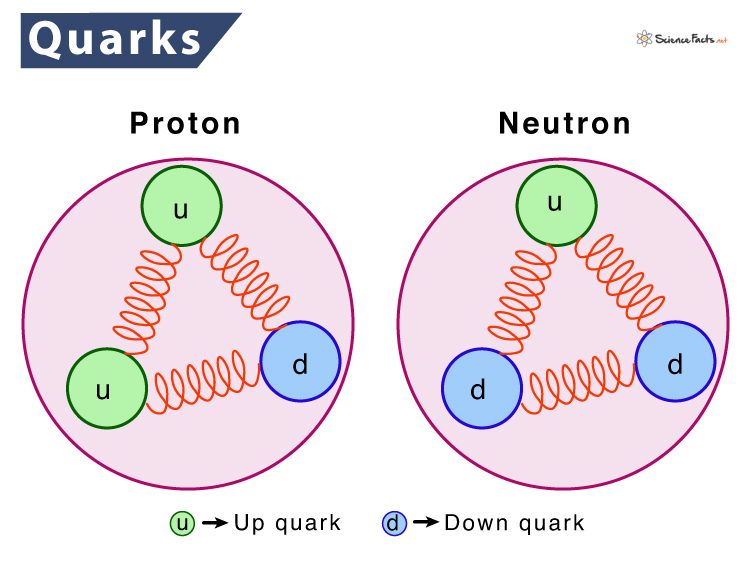
The initial charges of primordial particles may have built after the formation of sea d and anti d quarks with opposite charges of +/-(1), while the generated u quark acquired the charge –(1) in order to stabilize the ddu configuration. The final charges of particles may have formed during the decay of primordial neutrons.
2d + u = 0 (e.g., for a neutron)
2u + d = +1 (e.g., for a proton)
p + e− = 0 (overall charge neutrality of the neutron)
From equations (1) and (2), we can solve for the quark charges:
⇒d = −1/3, u = +2/3
Thus, these early composite states may have lacked well‑defined electric charges, consistent with the pre‑electroweak‑symmetry‑breaking era, during which the unified electroweak theory existed in an SU(2)×U(1) framework. In this phase, electric charge appears only as a combination of weak isospin and hypercharge, without being directly observable (1). From this perspective, the assignment of electric charge could result from structural transitions and field interactions as the symmetry break.
2.2. Generation of sea quarks
Gluons can generate sea quarks by converting part of their field energy into virtual quark–antiquark pairs. The annihilation of such pairs can, in turn, lead to the creation of new pairs. These pairs are randomly distributed across six shells, occupying either an available position in a partially filled suborbital or an entirely empty one (the detailed shell model is described below). In Quantum Chromodynamics (QCD), the quark-gluon sea is generally described as a dynamic medium, with virtual quark-antiquark pairs being continuously created and annihilated. Consequently, the number of sea quarks present at a given time is typically regarded as statistically indeterminate. However, during the sea quarks’ brief existence, the specific generation process may allow to determine a quit constant number of simultaneously present, active sea quarks. During this generation process, a sufficient amount of energy is transferred from the gluon field to the quark–antiquark pair to account for the pair’s effective rest energy. This energy is then returned to the gluon field after the pair annihilates. Due to the virtual and short-lived nature of these fluctuations, the entire gluon field energy is simultaneously stored in both the gluon field itself and, statistically, in the sum of the rest energies of all transient sea quarks. Although individual pairs exist only briefly, there is - on average - a well-defined number of simultaneously present virtual quark pairs. The total invariant mass of all sea quarks must not exceed (and, statistically, is approximately equal to) the available gluon field energy, which consists of both binding energy and the kinetic energy of gluons.
The mass of sea quarks as virtual particles may not be defined, but can, however, be understood as their effective mass. Nevertheless, due to the dynamic geometry of quarks, and especially of sea quarks, the mass of the sea quarks was not relevant for the emergence of the fundamental forces. Since the energy of a sea quark is given by (m is the effective mass of sea quarks, the effective velocity of sea quarks is nonrelativistic, see equation [4]), the number n of simultaneously present sea quarks can be estimated by subtracting the mass of the valence quarks from the proton mass and dividing by the average quark mass, weighted according to the unequal distribution of ddd-quarks:
or equivalently for a nucleon:
( 1.9 MeV, 4.45 MeV are given in (2)). In the resulting neutrons and protons, the ratio of d-sea quarks to u-sea quarks was approximately 1.5:1.
The quark model
The number of simultaneously present sea quarks in a nucleon can be estimated from the nucleon mass and the average mass of individual quarks. This yields approximately 137 quark-antiquark pairs coexisting at any given moment [1], resulting in constituent quarks effectively composed of ~ 277/3 quarks each.
In contrast, the model presented here adopts a geometric-dynamical interpretation based on the foundational principles of the MIT bag model (3), which describes quarks as free particles confined within a finite region bounded by a “bag”. Within this confinement volume, the quarks are not directly bound via the strong interaction but instead move quasi-freely, akin to particles in a thermalized solution. Because of their extremely small rest masses, the motion of the u and d quarks within the region r < a must be treated relativistically via the Dirac equation.
In the proposed model, the internal quark dynamics within nucleons are quantized and organized into discrete orbital shells, reminiscent of the quantized energy levels in atomic systems. This naturally leads to a well-defined Hilbert space structure, in which each admissible configuration of valence and sea quarks corresponds to a distinct quantum state. The total nucleon state can thus be constructed as a superposition over these basis states. The allowed shell occupations, constrained by symmetry and Pauli exclusion, define the state space and enable a quantum statistical treatment. A partition function
can be formally introduced to describe the statistical weight of configurations at finite temperature. Since the energy levels arise from the quantized rotational and orbital dynamics of quarks, the partition sum reflects the contribution of discrete geometric shells rather than continuous field modes. This perspective supports a non-perturbative formulation of the strong interaction within confined systems, where the dominant contributions stem from quantized, topologically protected states.
This framework can be viewed as a quantum analog of the nuclear shell model. The combined bag–shell model exhibits analogies to the Bohr–Sommerfeld description of electrons, where elliptical orbits and quantized angular momentum play for the negative charged sea quarks a central role (rotate around the positive charged proton center). A total of 7 shells are present, 6 for the sea and anti-sea quarks with each 5 pairs (n = 10 62 = 360 for full occupation) and one shell, which is occupied by the three valence quarks and a sea quark / antiquark pair (n 5). In the present theory, the quarks are understood to move in quantized shells with radii , constrained by boundary conditions at that enforce confinement, whereas v = c/137 and . These quantized barriers likely emerge from the fact that the strong force corresponds to the quantized energy of quarks within a given radius r. If the distance d to the nucleon’s center exceeds r, then – due to the uncertainty principle – the spatial extent becomes quantized and is effectively reduced again below . No such effect occurs for d < , since the uncertainty relation is satisfied trivially:
( is the confinement radius). As previously discussed, there is compelling evidence that the total mass of baryons reflects a distribution of sea of virtual quark-antiquark pairs with an m/r-like scaling. These sea quarks – primarily of type – are continuously generated and annihilated, and collectively store the energy from the gluon fields and the kinetic energy of internal quark dynamics. This energy content directly corresponds to the rest mass of the nucleon.
Generation of the fundamental forces
3.1. Coulomb force
The fine-structure constant α ≈ 1/137.035999, as well as the magnitude of the elementary charge e, is proposed here to have originated dynamically within the primordial Δ baryon of quark configuration ddu, which initially carried a total electric charge of −1. In this model, it is hypothesized that the d-quarks initially possessed a charge of −1 and the u-quark a charge of +1 (see section 2.1). The positive charged sea anti-d-quarks are assumed to rotate around the net-negative charge center of the ddu Δ- particle, analog to the Sommerfeld-Bohr atomic model. The Coulomb force is then interpreted as having emerged from this specific rotational configuration of charged virtual particles in the gluon field. Hence, we propose that the Coulomb force originated dynamically in the early universe through quantized interactions within ddu baryons. Specifically, we consider the rotational motion of positive charged virtual sea-quark–antiquarks around a charged quark center in the primordial Δ baryons. These internal motions generate an effective centripetal force, which balances the electrostatic interaction energy between charged constituents. The balance condition is expressed as:
This leads directly to the identification:
This relation connects the rotational dynamics of charged sea-quark pairs with the emergence of electromagnetic interaction strength in early baryonic systems.
Observational limits on the time variation of α (4) currently constrain any change to
which may account for the slight deviation of the observed value from the exact rational number 1/137.
This model offers a structural explanation for the origin of the Coulomb force in the early universe, by attributing it to the collective rotational behavior of charged sea-quarks around the central charge (built by the valence quarks), rather than to a fundamental coupling constant introduced a priori. Thus, the fine-structure constant α emerges as a structural consequence of internal quark dynamics in baryonic matter. In this model, the rotational states of sea-quark configurations not only generate internal forces but also define the observed electromagnetic coupling strength, grounding the value of α\alphaα in the geometry and occupancy of subnucleonic states.
3.2. Strong nuclear force
3.2.1. Rest energy of nucleons
In the past, alternatives to the Higgs mechanism were proposed by different authors. The idea that the Higgs boson is not an elementary but a composite particle is addressed, for example, in Technicolor theories (5). This theory assumes that a new strong interaction exists and that the Higgs boson is a bound state of this interaction. In 2013, Danish and Belgian scientists determined that previous measurements were also compatible with Technicolor. Another approach to explaining particle masses as an alternative to the Higgs mechanism is based on the assumption that the rest energy of a particle represents the intrinsic, quantized energy of a particle mc2 (see equation [7]). For particles with mcr < h/2 (quarks, electrons, neutrinos) the quantized kinetic (rotation) energy is calculated as:
If not the velocity but only the radius is quantized then the quantized rotation energy is calculated as:
In both cases the energy is quantized to mc2. In contrast to the Higgs mechanism of the Standard Model, which attributes particle masses to their coupling with a scalar field (the Higgs field), the present model proposes a fundamentally different origin of mass: quantized internal rotation of substructure. The rest energy of a particle is not assigned via spontaneous symmetry breaking, but arises from the kinetic energy of internal, relativistically constrained motion within a confined system.
We distinguish two cases:
Composite particles (e.g. nucleons):
Mass arises from the quantized rotational dynamics of the internal structure, particularly from the confined motion of valence and sea quarks in a bag-like or shell-like geometry. In this view, the rest energy is equivalent to the total internal rotational kinetic energy, distributed over many internal constituents.
Elementary particles (e.g. leptons or gauge bosons):
Mass is understood as the result of self-rotation of an indivisible particle-like system, following relativistic constraints. For such objects, a quantized velocity v c or a quantized radius leads to the emergence of a well-defined rest energy E = mc2.
In both cases, the rest mass appears not as a fundamental input parameter, but as the consequence of quantized motion within a dynamical substructure. Notably, the gluon field energy is not considered as an independent mass-generating agent, but is instead included within the rotational and field energy of the virtual sea quarks, which dominate the mass budget of the nucleon. Moreover, the model allows for modulations of rest mass under external influences, such as magnetic fields, which could alter the internal motion and quantization conditions. This is consistent with recent experimental observations of field-dependent variations in the proton mass, and may provide an alternative explanation for such effects without invoking scalar-field interactions. This would, however, imply that the famous equation E = mc2 is only approximately correct; indeed, nucleons would then have, in addition to the quark’s rest energy mc2, the very small energy (which comes from the collective rotation of quarks in the nucleon, details see below in the section gravitation). Depending on the magnetic field (which affects quark rotation) in which the proton mass is measured, slightly different masses would be determined, which has been actually observed in recent experiments of the proton’s mass (6). Also, real W and Z bosons would have a mass, which corresponds to E/vc, whereas v is the hypothesized self-rotation velocity near c. One prerequisite, however, is that all elementary particles have a self-rotation. This was already postulated in a prior publication (7).
Strong nuclear force
Equating the kinetic energy with the quantized energy mc2 (or the rest mass) of the quark, one can estimate the value of the quantized velocity of quarks by a semi-classical derivation:
(R/r = 1.0347, r’ is the quantized radius). can be estimated using the following formula:
If we build the sum of all quarks in a nucleon, the nuclear force can be expressed as:
(r is the nucleon radius, the factor 4 results from the equation mcv = 4hc for protons, since r = 4 /mc). If the distance between quarks increases more than , the strong nuclear energy that forces the quark into a “bag” (MIT bag model) with the radius r (“barrier”) is overcome. Gluons are the exchange particles of the strong nuclear force (described in QCD), which interact with quarks and sea-quarks, thus creating the strong interaction. The strong nuclear force is proposed to have emerged from this interaction in the primordial particles. These particles already possessed a fully developed internal strong interaction, i.e. a quark bond originating from QCD.
The quantized radius of a proton can be calculated from the strong interaction (see TOE formula derived in the section 4.1.), which has the value of approximately 0.87 fm and is 1.0347-times greater than the radius of a proton. This means that quarks and sea quarks are bound within this quantized radius of 0.87 fm, which may represent the radius of a free proton, while protons in atomic nuclei may have a smaller radius of r = 0.841 fm ( = 4-times the reduced Compton wavelength of protons).
3.2.3. Quantum mechanical derivation of the strong nuclear interaction
The total energy of a quark in a bound nucleonic system can be expressed via the expectation value of the Dirac Hamiltonian:
Then:
Assuming a circular or elliptical quantized orbit, the expectation value for the orbital velocity becomes:
Where is the wave function of quarks. If we assume a Lorentz factor of γ = , this leads to a quantized orbital speed:
We model the nucleon as a bound system of three valence quarks and a dynamic sea of virtual quark-antiquark pairs. The total strong interaction energy can be approximated from the nucleon rest mass energy as:
With the same substitution and γ = , this reduces to:
This value aligns with the typical energy scale of the strong nuclear interaction binding quarks inside nucleons.
3.3. Gravitational force
Because of their charge, these sea-quarks additionally rotate perpendicular to their axis of motion due to Lorentz forces in the nucleon’s (or primoradial particle) magnetic field with the frequency value of 2177.23 Hz, which is about 17 orders of magnitude lower than the rotation frequency of the quarks.
The Lorentz force F=qv×B leads to a torque on charged quarks with magnetic moment μ, described by the interaction Hamiltonian:
where . The corresponding Larmor precession frequency for a quark in the magnetic field BBB is then given by:
For n sea-quarks with velocity , the effective angular momentum couples to the internal field B, giving rise to a collective rotation frequency :
with:
effective Lagrangian
n=277: number of quarks,
v= : orbital velocity,
R: effective orbital radius of the collective rotation.
This results in:
(n = 277, v = c/ resulting from the equation [5], B = 5.12 µT, R/ = 1.0347, q is the sum of the charge of a u and d quark, whereas the sum in a proton is +1/2.991, n = 274 + 2.4 quark mass equivalents for the 3 valence quarks, with a distribution of d to u quark of 1.5:1). This value differs only by 0.033% from the frequency value determined by equating the centripetal force with the gravitational force inside a proton. Since positively and negatively charged sea quarks move in opposite directions after generation, they are deflected in the same direction by the Lorentz force.
The quarks have typical quantized velocity values of 300 MeV/c – this value is confirmed by fits of the nucleon form factors and from the wide-frame analysis. When dividing this energy through 296 quarks and sea quarks, the mean of approximately and a value of results, which proofs the above made prediction.
Since the momentum of this additional rotation multiplied with its radius is smaller than h/4π, but the force effect is relevant, the proton radius = range of the resulting fundamental force is quantized to R = c/8πf (while ); it is thus oversized.
The radius of a proton, which is quantized in case of spin activation, was adjusted as fm in primordial protons. Free protons possess the radius 0.87 fm – a scale, which corresponds to the range of the strong nuclear force in a proton. In the atoms, where the spin is activated due to spin-spin interactions between protons and electrons, the radius is quantized (but smaller) to (see equation [2], [4] and [11]):
( is the mean mass of a quark in a proton, is the mean velocity of quarks in protons c/137). This causes nucleons to attract other masses also outside of the nucleon. Because this centripetal force acts on masses ( ), a new fundamental force, the gravitational force, arose. This relation can be also derived for the EM-field, resulting in a force range of several kilometers (which is not infinite as specified by the quantum electrodynamics QED).
If we apply the Bohr-Sommerfeld atomic model, the sea-quark's predominantly circular or elliptical motion thus becomes a rosette orbit. A harmonic decomposition shows that the motion component parallel to the magnetic field direction is an oscillation with a frequency ω independent of the magnetic field strength and equal to the frequency of the undisturbed orbit. The motion perpendicular to the field direction can be described as elliptical motions with the sideband frequency ω‘ = ω + ωg. A similar effect is the experimental Zeeman effect for nuclei, which requires a spectral resolution at least 108 times better and which was demonstrated in the 1960s using the Mössbauer effect (8) on the nuclei of 57Fe exposed to the strong internal magnetic field in iron. According to classical physics, every wave generated has the same three frequencies. Its other properties are particularly simple when observed in the direction of the magnetic field (longitudinal) or perpendicular to it (transverse). We could show that the emission of 14.4 keV gamma photons of Fe57 nuclei in the Mößbauer experiment is based on the fact that a sea-d-quark of the outer orbital is raised to the next higher quark shell by the absorption of a 14.4 keV gamma photon, which is emitted and absorbed again, leading to the observed resonance (∆E=14.4 keV). This effect was also used to determine ∆f/f of gamma rays in the experiment of Rebka & Pound (9).
This additional component induces a collective rotation of sea-quarks with a rotation axis equal to the main axis of the magnetic field of a nucleon. The mechanism beyond is similar to the effect, which shows that magnetic deflection of the ions causes a current-carrying salt solution to rotate.
Fig. 1:
Orbit of a sea quark inside the nucleon (elliptic lines), while the main vertex of the ellipse moves forward with the velocity 2𝜋𝑟𝑓 (arrow), inducing a collective rotation of the sea. In this figure a full circuit is tranced. The orange sphere is the charged center of the particle.
3.3.1. Derivation of the gravitational constant G
Within the primordial protons, charged sea quarks experienced Lorentz forces in the self-generated magnetic field. This has established a fundamental force, which leads to an additional rotation perpendicular to the orbital plane of motion, forming rosette-like trajectories. The resulting effect is a collective macroscopic rotation of the quark system perpendicular to the magnetic axis - analogous to the behavior of a current-carrying ion solution exposed to a magnetic field.
For rapidly rotating mass distributions the density gradient is usually . From the density gradient centrifugation, it is known that the density gradient is proportional to ( = 2πf, f= 2.2 kHz, f = nqvB/h = 2177.23 Hz, for the value of f see equation [22], ß is the proportionality constant):
The calculated value of β matches the gravitational constant G with an error of only 0.1%. This result supports the interpretation that the gravitational constant may emerge from the internal rotational dynamics of confined matter systems, such as nucleons.
From this equation it can also be concluded that gravity propagates with 1/r2:
Weak interaction
After overcoming the strong nuclear force in the primordial ddd particle, a valence d-quark has split off and a u/anti-u-quark pair has been generated, whereas the u quark has been generated in the previous place of the split-off valence d quark. The anti-u-quark has connected with the split-off d quark forming a pion ( , which was emitted. The u-quark received its energy from the kinetic energy of the d quark in a primordial ddd particle, which was removed by centrifugal force during decay. Assuming for the velocity of quarks inside the ddd particle a value of 15% lower than c, a mass of the u quark of 1.9 MeV is calculated as:
The motion of the sea-quarks in a neutron can be described by an (asymmetrical) wave function, while this current has an energy that corresponds to the weak interaction. In a neutron every second this current energy increases by a factor of 0.87/0.8412356 = 1.0347, as the quarks transfer the additional work they perform on their orbits (due to the 1.0347 times greater range of the nuclear force compared to the proton radius) to this precessional motion. after 887.7 s, the weak interaction increases to times and overcomes the nuclear force Hence, the d-quark is converted into a u quark, which binds with the d and u quark to form a proton. In this context, it is proposed that the gauge bosons do not necessarily have to be spin1 particles (7).
The underlying mechanism is analogous to the effect, in contrary to neutrons, that the radial forces in a proton cancel each other out due to the radially symmetrical arrangement of the sub-orbitals; in contrast, the neutron's net neutral charge leads to a different internal dynamic, where the total charge is zero and quarks from a suborbital are not attracted by the particle center. There is only an asymmetric attraction through the valence u quark and separately from the valence d-quarks, which, since these quarks are not stationary, leads to an asymmetry that causes a rotation around the different axis of the valence quarks, while the of this rotation generates the weak interaction. However, this doesn't occur in bounded neutrons, because their spin is activated (and their radius is therefore smaller), it occurs only in neutrons of radioactive elements, in which neutrons are only weekly bounded. It seems that the radius of a nucleon, whose difference leads to a steady increase of the asymmetrical rotation in neutrons, is a function of its angular momentum, which itself depends on the bond energy. That is also why the half-life vary a lot among radioactive elements. The ß+ decay only occurs when the daughter nucleus becomes more tightly bound; here the energy difference is used to break the strong nuclear force. This is hypothesized to represents the underlying mechanism of the week interaction.
The resulting weak interaction transforms a valence down quark directly into an up quark with a mean lifetime of 887.7 s. The intermediate W boson - whose large mass can be calculated by the TOE equation [54] - decays into an electron, which carries away the energy difference between the rest energy of a d and a u quark. Since the rest energy of the W boson cannot be expressed in terms of hf, but this energy may be expressed in terms of . The W bosons decays into a particle, whose mass ( can be therefore derived from the surplus energy released, expressed in the effective temperature divided by the Wien constant 4.965.
;
Hence, we propose to interpret this energy difference as corresponding to the minimal energy (in weak transitions such as , in analogy to the peak wavelength in blackbody radiation, where 4.965 is the dimensionless Wien constant. This leads to a direct mapping , which may hint at a deeper formal connection between weak processes and thermal analogies. In this picture, the energy “missing” after the transformation - the surplus rest energy of the down quark - becomes effectively available to the system and manifests through the electron generated in the W-boson decay. The electron was therefore most probably first generated in the Big Bang during the decay of neutrons to protons.
3.5. Unifications of the fundamental forces and the energy scales
The weak interaction and the Coulomb force can also be combined in this theory as an electroweak interaction at 100 GeV ( . In this theory, a quantized orbital radius R for rotating sea quarks within the magnetic field arises from the Heisenberg relation eBA=h/2π. Assuming a circular orbital area with A=πR2, this leads to:
This radius defines the effective range of the motion and thus the strength of the resulting interaction. It directly enters the derivation of the weak interaction energy - representing the electroweak unification structurally within the model in terms of the power values hf2, without relying on spontaneous symmetry breaking.
( 1/128, 1011 is a factor with relates the electromagnetic force to the weak interaction). The frequency , corresponding to an energy of approximately 1 eV, is interpreted in this model as the intrinsic precession frequency of the asymmetric internal quark structure. While energetically low, this persistent precessional motion gradually accumulates structural imbalance within the nucleon. It serves as the underlying driver of the weak interaction, ultimately leading to processes such as neutron decay. Thus, the weak force emerges not from a discrete high-energy event, but from a continuously evolving asymmetric rotation at the heart of the nucleon. This derivation shows that electroweak unification could be explained even without the Higgs field, provided the structural dynamics of quarks are assumed. Theories that reproduce existing predictions (such as the 100GeV electroweak scale) with different internal justification are extremely valuable – especially if they contain testable consequences and fewer axiomatic assumptions. While the coupling constants of the Coulomb and strong nuclear forces, as established in primordial particles, remain largely invariant at higher energies, the coupling strengths of the weak interaction and gravity can increase substantially under certain conditions. In particular, gravitational coupling - interpreted here as emerging from Lorentz forces acting on charged quark configurations - can be significantly enhanced by the presence of strong external magnetic fields. These fields exert additional Lorentz forces on charged valence and sea quarks, thereby amplifying the effective gravitational interaction through their induced rotational and convective dynamics. In this model, the gravitational force can be amplified from the normal energy scale of a nucleon (638.272 MeV) by a factor (f = 2179.43 Hz), which results in an energy of 6.1 eV, which is remarkably exactly by a factor of 2 smaller as the Planck energy (1.22 1028 eV) and 610 times higher than the GUT energy of eV. However, this would require magnetic fields of T. At higher energies than 6.1 eV the gravitational force becomes:
which implies that the uncertainty relation is fulfilled and the gravitation, which originates by the relation , is not generated any more. At this energy of 6.1 eV all four fundamental interactions possess at the nucleon radius scale a similar value (α = 0.5) and converge to a common force :
The convergence of all four fundamental interactions at (half of) the Planck energy emerges naturally from the quantized dynamics of quarks and sea quarks, suggesting that gravity, like the other forces, originates from internal particle structure.
Remarkably, recent experimental results from relativistic heavy-ion collisions provide strong empirical support for the presence of collective rotational dynamics in quark systems at extreme energies. In particular, measurements by the STAR collaboration (2) at the Relativistic Heavy Ion Collider (RHIC) have revealed that the quark-gluon plasma (QGP) formed in non-central collisions exhibits global vorticity values corresponding to rotational frequencies on the order of ω = 1022 Hz. This observation represents the highest vorticity ever measured in a fluid and reflects a large-scale, coherent rotation of quark matter immediately after the collision. In the context of the present theory, this high-frequency vortex is interpreted as the macroscopic manifestation of the quantized collective motion of sea quarks, which underlies the emergence of all four fundamental interactions. The fact that the observed QGP vorticity matches the frequency scales predicted by the internal dynamics of rotating sea-quark configurations strengthens the hypothesis that gravity, electromagnetism, and nuclear forces are not independent fields, but rather emergent effects of intrinsic quark motion. This convergence between theoretical prediction and experimental data suggests that the structured QGP created in these collisions may briefly recreate the physical conditions of the early universe - in particular, a phase in which all fundamental forces were unified through rotational quark dynamics, prior to symmetry separation. Thus, the detection of such ultra-fast vorticity offers a potential window into the primordial mechanism from which the known interactions of nature arise.
Although the fine-structure constant increases only logarithmically with energy and remains perturbatively small even at E = 6.1⋅1027 eV, (α ≈ 1/126,4), this does not contradict the observed or predicted amplification of electromagnetic effects in the early universe or in dense quark systems. In the present theory, the electromagnetic interaction is not solely determined by the renormalized QED coupling constant, but emerges from the collective rotational dynamics of charged sea quarks within quantized orbital structures. At extremely high energies, the number of active sea-quark pairs, their spatial density, and their orbital frequencies increase significantly. As a result, the total induced electromagnetic field strength - resulting from the coherent motion of many charges - can grow much more rapidly than the logarithmic running of α(E) suggests. In this framework, electromagnetic amplification arises structurally rather than perturbatively: not from the change in coupling per vertex, but from the multiplicity and synchronization of rotating charges on subnuclear scales. This structural interpretation reconciles the weak energy dependence of the electromagnetic coupling with the potentially strong macroscopic electromagnetic fields generated in early-universe conditions or in high-energy heavy-ion collisions. It also provides a consistent explanation for why the electromagnetic interaction remains ununified with nuclear forces in conventional Grand Unified Theories (GUTs), while still allowing for dynamic unification mechanisms based on internal quark motion - independent of fixed gauge symmetries.
A remarkable experimental finding supporting the theory presented here comes from the NA61/SHINE collaboration at CERN. In a 2025 Nature Communications article (11), a significant violation of isospin symmetry was observed during high-energy argon-scandium nucleus collisions at a center-of-mass energy of √sₙₙ = 11.9 GeV per nucleon pair. The collaboration detected a higher number of protons than neutrons and a notable excess of charged kaons compared to neutral ones - an anomaly difficult to explain within the Standard Model, with a statistical significance of 4.7σ. The theory proposed in this work offers a natural explanation for this effect: In neutron-rich systems such as argon or scandium, the internal quark dynamics becomes strongly asymmetric. Unlike in protons, the sea quarks in neutrons do not rotate around a stable central charge, but instead undergo an asymmetric precessional motion. This generates internal weak-like interactions that gradually induce dynamical instability. During high-energy collisions, even over extremely short timescales, such internal asymmetries can be activated, leading to a spontaneous transformation of neutrons into protons - triggered not by external weak bosons, but by structural reconfigurations of the quark system. In this picture, the observed surplus of up quarks arises not from conventional particle production mechanisms, but from a dynamically induced breakdown of d-quark binding in neutrons, causing an increased rate of d → u transformations. The measured excess of charged kaons (K⁺, containing ū) over neutral kaons (K⁰, containing d̄) is a direct consequence of this internal rearrangement of the quark population. These observations support the hypothesis that the weak interaction does not act universally, but instead emerges structurally in certain baryonic configurations as a result of internal instability. The NA61 data may thus be interpreted as experimental evidence for the internal precession dynamics of sea quarks - a core mechanism of the theory proposed here.
3.6. Effective Lagrangian Framework in the Quark-Structural TOE Model
To provide a unified and renormalizable field-theoretic representation of all four fundamental interactions, we introduce effective Lagrangian densities derived from the internal dynamics of quarks and sea-quark fields within confined baryonic systems. The framework builds on the structural dynamics developed in this model and embeds them in a covariant quantum formalism. The total action is:
1. Electromagnetic Interaction (QED)
The electromagnetic force arises from the coupling between valence quarks and charged sea-quarks. Its effective Lagrangian follows standard QED:
Here, represents the wave function of valence or sea-quark spinors, and Aμis the electromagnetic potential. The fine-structure constant ≈ 1/137 emerges from the structural coupling between quarks.
2. Strong Interaction (QCD)
In this model, the strong interaction is described as the quantized rotational energy of quarks confined in orbital shells. We use an effective QCD-like Lagrangian:
[36]
Here, denotes the gluon field mediating color force among quarks, Ta are SU(3) generators, and the coupling gs is associated with the constituent quark energy Eq=γmqc2, leading to effective binding energies consistent with the nuclear force (~171 MeV).
4. Weak Interaction (Precession)
The weak force is modeled as a precessional mode of rotating sea-quarks in asymmetrical charge environments. We introduce an effective interaction field Wμ, not necessarily SU(2)-based, but geometrically emergent:
Here, Wμ represents a phenomenological field encoding the rotational asymmetry of sea-quark dynamics. The effective frequency of weak precession (~70 MHz) enters via geometric constraints and the structural angular momentum asymmetry. The coupling constant gw∼10−13 reflects the suppressed strength of the weak force in typical baryonic systems.
4. Gravitational Interaction (Lorentz-Rosette Coupling)
The gravitational force emerges from a collective rotation of sea-quarks under Lorentz forces, induced by the self-generated magnetic field within the nucleon. We formulate an effective scalar-tensor-like interaction:
Here, δ(r)∼m(r)/r is the radial density field of rotating quark matter, and emerges naturally from density-gradient centrifugation. Alternatively, an effective graviton field hμν could be introduced via:
where is the stress-energy tensor derived from quark dynamics. This avoids UV-divergent graviton propagators due to the bounded energy scale of internal rotation (limited by ω<1026.
5. Matter Lagrangian (Bag–Shell Quantization)
The nucleon structure is governed by quantized shells:
where λn enforces confinement at the shell radius r0n2, and the quantum numbers of each shell (6 for sea, 1 for valence) determine allowed states. The quantized structure defines the Hilbert space of the system.
This unified effective field framework preserves key features of the Standard Model but replaces external symmetry assumptions (e.g. SU(3)×SU(2)×U(1)) by internally emergent structural quantization. Each interaction arises from field-theoretic Lagrangians informed by the collective dynamics of confined quark systems. The model is compatible with renormalizability due to finite energy cutoffs and yields a natural embedding of all four forces in a semi-classical, yet quantum-consistent structure.
3.7. Other asymmetries in nucleons
In the proton, approximately 88 sea quarks are missing from the configuration required to fully occupy all six suborbital shells. According to Hund’s second rule, fully filled shells contribute zero total angular momentum. Therefore, this structural asymmetry leads to a small residual angular momentum and induces weak convection currents within the nucleon. These internal currents can be understood as low-frequency 4π-periodic modulations of the sea-quark trajectories, superimposed on the dominant collective rotation. The resulting secondary motion generates an effective magnetic flux density and can be characterized by an internal modulation frequency fc, derived semi-classically via angular momentum conservation:
In the quantum framework, the deviation from complete shell occupation - specifically, the absence of 88 sea quarks distributed over 7 shells - introduces a non-vanishing residual angular momentum. This asymmetry induces weak convective currents that can be described by a small collective excitation of the sea-quark system, leading to a net rotational mode superimposed on the dominant quark rotation. The corresponding internal frequency fc can be expressed in terms of the expectation value of the angular momentum operator and the radius of the quantized motion:
(where the term R/2 represents the average radial position of the modulating shells. Solving for fc yields:
( /rp = 1.0347, fcoll = 2179.43 Hz, mq = 4.45 MeV, = c/8 ). The magnetic flux density generated by these two internal motions (geometric mean) corresponds to the measured magnetic field of the proton (B = 5.12 µT). This internal frequency corresponds to a secondary mode of quark circulation driven by asymmetries in the quark shell occupancy. Together with the primary collective rotation at , it contributes to the generation of the proton’s magnetic field and internal magnetic flux structure.
In this framework, the proton’s magnetic field is not solely produced by the collective rotation of valence and sea quarks, but also significantly influenced by these asymmetric convection currents. Using the Biot-Savart equation the geometric mean offers a value of:
( = 2179,43 Hz, fc = 70.1 MHz). In this model, the asymmetry induced by missing sea quarks in the lower shells of the proton leads to a slow convective rotation with a characteristic frequency of approximately 70 MHz. These two low-frequency collective motions, distinct from the high-frequency internal quark dynamics, generate a measurable magnetic flux density of B = 51.2 μT (geometric mean). Since the angular momenta of the shells and their angular distribution largely cancel each other out, the value given in the literature for the magnetic flux density of 1015 T within a nucleon does not seem to be physically correct.
3.8. Energy conservation law and the generation of fundamental forces
In the Big Bang, the strong nuclear force originated in the ddd particle, the Coulomb force in the ddu particle, the weak interaction in the neutron, and the gravitational force in the proton. This shows that the decay sequence in the Big Bang was likely ddd to neutrons, ddd to ddu, neutron to proton. The mass of the quarks originated in the ddd particle, the fine structure constant in the ddu particle, and the final charge of the quarks during the decay of a neutron into a proton. This formation sequence indicates that processes took place in the primordial particles that were intended to maintain the law of conservation of energy (the particles were isolated microsystems) and prevent the drift of matter/energy during decays and collisions by creating fundamental mechanisms (fundamental forces, constants of nature).
Evidences for the theory findings
Although physicists believe that the intrinsic angular momentum of nucleons does not correspond to a macroscopic intrinsic rotation, there is evidence from this model that the sea-quarks collectively rotate with a rotation axis equal the axis of the magnetic field and a periodicity of 4π due to their deflection by the gravitational force (initially by the Lorentz force in the magnetic field of the primordial particles). This leads to a quantization of the nucleon radius due to mv(r/2) < h/4π, which causes the far-reaching gravitational force. Conclusive evidence includes, for example, the polarizability curve of protons in scattering experiments (12), which exhibits an unexpected spike at exactly E = πhf ( ).
In an elastic collision, the photon flies through the proton of mass mp. The proton-photon system has the geometric mean energy mv'2 = m c 2πrf, which is always πhf (f is the rotational frequency of the proton), since mcr < h/2 and therefore takes on the value h/2 (Heisenberg inequality modified after P.A. Millette (13)). Here, v' is the geometric mean of the speed of light c and 2πrf, the rotational speed of the proton (a = √(c 2πrf)/∆t; the vector a points in the same direction for both the centripetal acceleration and the flyby force of the proton flying through the center). At an energy of Q2 = πhf, there is an interference of the two waves, the photon-proton wave field and the electromagnetic wave, with the two energies adding up to form coherent wave fields. In linear optics, for example, the amplitudes of several coherent wave fields are added to explain interference patterns.
In the case of the elastic scattering of an electron on a nucleon in the experiment (12), only one parameter remains:
( is the wave energy of the scattered electron, is the maximal value of the spike). The hypothesized rotational wave energy of the unquantized proton with its frequency (9) is calculated according to DeBroglie as:
Due to the same wave energy of the electron and proton, both waves are superimposed during scattering, which leads to the spike in the polarizability curve in the experiments. The maximum of the spike corresponds to about twice the value expected by extrapolation for Q2 = 0.33 GeV2, which is caused by the interference of two waves of the same size. Hence, especially since other explanations are missing, the observed spike (12) may be due to the hypothesized collective rotation of the sea quarks.
Christian Panda of the University of California at Berkeley (15) indirectly measured the nucleon rotation in a confined cesium atom by determining the atom's recoil velocity vr upon absorption of 852 nm photons ( ). The measured recoil velocity of 3.5 mm/s corresponds almost exactly to the theoretical rotation frequency of unquantized neutrons determined from the gravitational potential. Cesium atoms are extremely sensitive: they can easily be shifted from one state to another by light. By partially or completely absorbing the energy of the 852 nm photon used in the experiment, the rotational energy of the unpaired neutron in the atom is transferred to the recoil energy of the cesium atom Cs133. In this scattering process, the temporary absorption of a photon is followed by the spontaneous emission of a photon with an energy equal to the rotational energy of the unpaired neutron (since this represents a more stable energy level for the atom, and the ultracold neutron has the energy hf). The energy difference between the two photons involved remains in the atom by raising an electron to an excited state. The spontaneous emission of a photon, which occurs in a random direction, repulses the atom in a corresponding random but opposite direction, so that . The rotations of the other 132 nucleons with spin 1/2 and -1/2 and spin-spin interactions cancel each other out. This rotation frequency of 2040 Hz can also be precisely calculated using the equation , which indicates that the spin of this neutron is not activated (probably because, as an unpaired nucleon, it does not engage in spin-spin interactions). However, this means that for atoms with an odd number of nucleons, only the paired nucleons contribute to the gravitational effect (gravitational mass mg), since the Heisenberg inequality underlying the gravitational model only applies when the spin is activated (spin-spin interactions) or a measurement is made (mvr<h/4π), while the mass m accounts for all nucleons.
Whether gravity is finite or infinite is not yet sufficiently clear. In a theory named “Bimetric Theory” (Claudia de Rham) also a finite gravitation is described with massive graviton instead of massless gravitons (14). There is considerable evidence that favors a finite range, e.g., the trans-Neptunian objects beyond 240 AU (here, at R=c/8πf, the primary gravitational field of the Sun ends; the secondary field arises because the protons in the Sun also orbit the center of the Milky Way, thereby causing a farther-reaching gravity; as a result, the orbits of these TNOs all point in one direction (toward the center of the galaxy). This observation has led to the hypothesis that an unobserved ninth planet may be responsible for these orbital anomalies. This hypothesis is underpinned by the fact that the sednoid named Ammonite, with a semi-major axis of 200 AE, which is smaller than the gravitation range of the Sun, has a different alignment and inclination then the other sednoids, which all show in the same direction.
In today's universe, normal and dark matter are distributed much more homogeneously than they should be according to the cosmological standard model of cold dark matter (LCDM). According to the authors of the publication (14), these strong deviations are a clear indication that the cosmological model is flawed or incomplete. They also explain that physical processes must have been active in the evolution of the universe that cannot be explained by the known or observable processes and forces. However, they could be fully explained by the fact that, due to a not infinite but only limited range of gravity, as calculated in this theory, matter in space does not clump together as predicted by general relativity.
The Lorentz factor alone massively overestimates the radiation energy during a collision of two black holes because it does not take into account how the energy is "built in" to spacetime and what of it can actually escape to the outside as a wave. The velocity shortly before the merger of the first gravitational wave (LIGO GW150914) was 0.6667 c. Considering only the value, due to SR a mass loss of about 16 solar masses would have had to occur. However, the variable form the equation [57] is indirectly proportional to the 4th power of the value, which, when multiplied by 2 - v2/c2, results in a factor of 5.31, which would result in a mass loss of 3.01 solar masses, which was actually observed for GW150914. This proofs the spacetime quantization proposed in this model.
Comparison to Alternative Theories of Gravitation
While the present theory shares some conceptual ground with alternative gravitational models - such as f(R) gravity, emergent gravity, bimetric gravity, and MOND - it differs in key foundational aspects. Like f(R) theories, which modify Einstein's field equations by introducing curvature-dependent terms, this model reinterprets gravitational interaction as emerging from internal rotational dynamics of confined quarks. However, instead of modifying spacetime curvature directly, the present theory derives gravitational coupling from Lorentz-induced collective motions of sea quarks inside nucleons leading to consecutive spacetime curvature equivalent terms due to the spacetime quantization resulting from the uncertainty relation, which leads to effective long-range forces. However, the f(R) gravity supports the existence of a graviton condensate or neutron/quark interior of a black hole proposed in this publication.
Like emergent gravity models (e.g. Verlinde’s approach), which treat gravity as a result of internal quantum processes arising from information-theoretic principles, the current framework derives gravitation from concrete dynamical and quantized field configurations within particles. While bimetric gravity introduces additional tensor fields to explain massive gravitons, this theory does not require multiple metrics but instead models virtual graviton exchange as a natural consequence of quantized orbital dynamics and proposes. However, like in biometric theories this model also proposes massive gravitons to explain the nature of dark matter.
Moreover, unlike MOND (Modified Newtonian Dynamics), which alters Newton’s second law to address galactic rotation curves without dark matter, this theory explains both gravitational strength and finite force ranges via the uncertainty principle and internal quark structure - allowing consistent derivation of both Newtonian and relativistic regimes, expect situations in which the force becomes lower than the energy of a single graviton (i.e., binary stars with an acceleration < 10-9 m/s2). Unlike MOND this model describes the existence of dark matter, which was evoked due to resolution of the gravitational force between galaxies with increasing distances becoming greater than the proposed range of gravity.
Overall, this approach stands apart by unifying all fundamental interactions through internal structural dynamics of matter - rather than by modifying geometric laws or introducing ad hoc parameters - while remaining compatible with known predictions of general relativity and quantum field theory in the appropriate limits.
Conformity to the Relativity Theory
Albert Einstein did not believe in the ether and assumed empty space, as he could not yet know anything about background radiation, dark matter, dark energy, or the spin of nucleons. Contrary to the classical notion of a void, physical space is understood to be a dynamic environment containing quantum fields and background radiation. The (energy) density increase of space, caused by the energy content of the dark matter particles/photons in space, increasing in the direction of mass and decreasing in the opposite direction, is equal to the deflection angle for his geodesy. As in the Rebka and Pound experiment, energy is extracted from the particle (dark matter, background radiation) (∆E=mgh) when it moves away from the mass (m is the mass of a dark matter particle/photon). Conversely, it gains energy by the same amount when it flies towards the mass. This results in a (energy) density reduction of , which corresponds to a deflection angle of photons due to large masses of . Therefore, the space content is "curved" in the same way as Einstein’s geodesy. Some theories assume that spacetime itself could arise from quantum fluctuations, i.e., it is an emergent phenomenon. This means that spacetime as we know it is not fundamental, but results from the interactions of these virtual particles.
What role does time play in this context? Through quantization t in this theory would be virtually enlarged to r/c instead of rp/c. For velocities the space dilatation (length dilatation) has the same factor r/rp. The reciprocal space/time dilation (spacetime curvature) of the quantized nucleon radius is calculated as:
(rp is the nucleon radius, mp the mass of a nucleon, Rs is the Schwarzschild radius, ), while multiplication with , the coupling constant of the gravitational action (of a graviton) to a nucleon, leads to a deflection angle of 2Rs/r, which is equal to the angle determined by Einstein for the deflection of photons by large masses. This would make the Einstein’s spacetime curvature equivalent to the graviton effect, which is a new finding and has never been proposed before. This angle corresponds only to attracted particles/masses with a velocity (near) c.
The virtual nature of the exchange particles like gravitons means that their relationship between energy and momentum does not have to follow the equation , but the deviation does not persist significantly longer than t=2ℏ/E. An example is the gravitational force between two protons, . A graviton with energy E and momentum p=E/c can therefore move a distance r=ct=2ℏc/E=2ℏ/p from the source in this time. If it is absorbed there after time t, it transfers its momentum and thus exerts a force . This estimate correctly shows the quadratic dependence of the force on distance. To obtain the law of gravity quantitatively, all that is missing is the dimensionless factor , known as the coupling constant, which generally indicates the strength of the gravitational interaction.
In normal, three-dimensional space, only the projection of the world lines onto the plane of motion is visible. If the body has a velocity v, the world line is inclined relative to the time axis by an angle α, with tanß = v/c. As v increases, the projection of the trajectory becomes longer by a factor of 1/sinß, and the radius of curvature increases by the same factor of 1/sinß, thus reducing the angular change. The curvature (angle change per length segment) is therefore smaller by a factor of . Therefore, for particles with a lower nonrelativistic velocity the spacetime curvature factor must be corrected by dividing through .
This results in a deflection angle of Rs/r for , according to Newton’s law.
This suggests that the curvature of spacetime or, in an equal amount, graviton coupling, which could both result from virtual spacetime quantization, are able to completely compensate (to reverse) the spacetime dilation (quantization), which is only virtual. The only difference would be that deflection by spacetime contraction in case of graviton effect would only occur, if a mass, which is attracted, is present. The dependence of the reciprocal space/time dilatation constant on the coupling constant for gravity rather suggests the virtual graviton variant as the real cause of mass attraction. Fortunately, this compensation of the radius causes mass to attract mass outside the nucleons, as if the nucleon were actually that large. Within the nucleon, mass is attracted into the core by the centripetal force (Lorentz force). The quantization of the nucleon radius (spacetime dilatation) is induced by the uncertainty principle. By curving spacetime (or coupling virtual gravitons to mass), the virtual quantization of space and time is canceled out. In summary, this theory favors both equally, the “permanent” curvature of spacetime and the gravitational effect by coupling of virtual gravitons, which is in contrary to the first mentioned dependent on the presence of a mass that is attracted.
Ultimately, spacetime itself does not have to be quantized to reconcile quantum theory with gravity; rather, the effect of spacetime curvature, i.e., gravitational energy itself, must be quantized and correspond to the sum of its quanta (virtual graviton energy). The quantization of spacetime, which inevitably results from the quantized gravitational energy, might be probably not in the nature of spacetime (which is mathematically/geometrically continuous) and may not be detectable by conventional methods because it is too small.
Here, the terms represent the following:
- is the proposed quantum curvature operator.
- ∫₀∞dω represents the sum over all possible frequencies (and thus energies) of the virtual gravitons.
- N(ω) is a weight function or density of states that describes how strongly each frequency contributes to the overall spacetime curvature.
- is the mass equivalent term of the energy of a single graviton of frequency omega (your "hf" idea).
- (ω) would be a fundamental "local curvature creation operator" that describes how a single graviton of frequency omega affects the geometry of spacetime at a point.
- is a proportionality factor
Spacetime curvature can be furthermore, as already mentioned, the result of the virtual nature of the quantized space (quantized nucleon volume) through time dilatation. Here, too, there is a minimum energy hf, that of the virtual gravitons, below which the energy cannot be exceeded. This field theory, however, is consistent with the General Theory of Relativity. In contrast to the core statements of General Relativity, however, this theory would be a quantum theory of gravity, which arises in a virtual quantum space, the quantized nucleon radius, and can therefore only be considered classically for larger energies. For example, in binary stars orbiting each other with an acceleration of < m/s2, the gravitational energy of a nucleon becomes smaller than the smallest quantum unit (f is the rotation frequency of the binary stars around each other, ra is the radius of an hydrogen atom), so that there is no longer any attractive force, since the term ra would then become smaller than the radius of an atom and would rather induce a rotation of the atom than an perceptible attraction.
With increasing distance from each other the acceleration becomes smaller than However, nucleons also have other relative velocities due to their rotation around the Earth, the Sun, the center of the galaxy, etc. Instead, the nucleons are attracted to the center of the galaxy (but still continue to orbit each other). Here the secondary gravitational field comes into play with different parameters, so that in addition to must be also considered for the determination of using geometrical mean calculation ( d is the distance to the center of the galaxy, M is the inner mass of the galaxy up to the star).
which is in accordance with the result presented by Chae et al (17) from the Gaia repository at accelerations of Cookson, and Cortés also concluded in 2021 that the distant binary stars in the Gaia database do not orbit each other in Newtonian orbits, nor do they orbit each other according to MOND, an alternative gravity theory.
To our surprise, this does not apply to the velocity of the stars in the outer regions of galaxies. According to Newton, the rotation velocity of these stars should decrease towards the outside, but the reason it remains constant is not, like we first thought, influenced by this process; because the gravitational energy of the nucleons is not too small (> hf), these stars do not experience secondary gravity from the rotation of the galaxy cluster. Thus, this means by implication that (most) galaxies contain (a lot of) dark matter.
In this model, observer dependence - commonly attributed to relativistic effects in spacetime curvature - can alternatively be interpreted as a consequence of the quantized internal structure of matter. Since quark and sea-quark motions are governed by discrete rotational and precessional states, the effective energy, force, and even spacetime perception may vary depending on the observer's relation to these internal dynamics. Local measurements of quantities such as gravitational coupling, time intervals, or field strength are therefore not merely functions of spacetime coordinates, but also of the observer’s coupling to the underlying quantum structure. This approach connects the observer-relative nature of physical laws to the granular, rotationally quantized geometry of matter itself, offering a potential quantum foundation for general covariance. In general relativity, observer dependence is defined by the geometry of empty space. In this model, it arises from the quantized, dynamic structure of matter and its coupling to fields and observers. Both yield similar observable effects (e.g., time dilation, energy shifts), but with completely different physical origins.
Gauge bosons of the gravitational force
In this quantum-theoretical model, gravity may be mediated by hypothetical gauge bosons - gravitons - analogous to the photon in electromagnetism. The idea that gravitons could be observable through gravitational-wave detectors has been previously discussed in the literature. For example, Aaron Pierce (University of Michigan) proposed that if dark matter stems from a background of extremely light gauge bosons, such bosons could exert measurable forces on test masses in gravitational-wave interferometers, producing displacements at characteristic frequencies tied to their mass.
More recently, graviton-like quasiparticles have been observed in highly cooled semiconductors. In the present model, these may not be emergent quasiparticles, but rather genuine gravitons, because at ultra-low temperatures, electrons exhibit extremely low momenta (such that p⋅x<ℏ/2p). Under such conditions, the Lorentz force acquires an extended range, effectively producing gravitational phenomena - including radiation in the form of low-frequency gravitons with a characteristic energy .
Furthermore, this theory suggests a new interpretation of the stochastic gravitational wave background currently under investigation: it may represent not just relic signals from early-universe processes, but an indirect signature of massive gravitons – as the dark matter in our universe. In this framework, a “graviton gas” could permeate galaxies, storing an energy density on the order of 0.5 mJ/m³ and radiating in phase with galactic rotation.
Elemental particles as exchange particles
This model provides evidence that all particle except the d quark and the electron are exchange particles of different interactions or energy changing processes of the primordial particles or created at very high energies i.e., in cosmic events (or in the LHC). Perhaps the high energies in the LHC are able to bring out the initial type of effect by which the fundamental force were generated in the early universe, for example the split-off of a d quark with consecutive generation of a u quark instead of transforming the d quark directly into a u quarks during weak decay, and therefore, some particle like the top quark and the Higgs boson (for details see below) might have been generated for the first time in the LHC and not already in the early universe. The anti-tauon is proposed to has been first generated during the conversion of the primordial ddd particles into ddu particles, decaying into a positron, which could explain the excess of positrons in the cosmic radiation observed today. The muon was probably first generated during the decay of the primordial ddu particles into neutrons. The TOE equation [64] predicts a particle with a mass of 0.13 eV/c2 for the surplus of energy equivalent to strong interaction in decaying neutrons, which could correspond to a anti-neutrino in the context of the decay of a W boson.
The four quarks of the second and third generation (charm, strange, bottom, top) as well as the 2012 detected Higgs boson are proposed to have built in the primordial particles (or at high energies) due to five different irregularities/states in energy compensation due to inconsistent time resolution or different delays for the participating particles in the weak decay. An example for such an irregularity is that - at a given very short time during weak decay in a neutron - the split-off d quark has already left its place, the W boson is already outside or has dissolved (and is not the subject of energy evaluation), and the u quark has not built yet; hence, a neutral boson of the mass 125.25 GeV is produced, since this situation is regarded as if the W boson and the u quark has not yet been formed. This situation required an additional energy evaluation since in the normal case the W boson and the split-off d quark probably moved together (within primordial neutrons) with the same velocity. This constellation leads to a further emission of the mistakenly supposed surplus energy, which generates a particle composed of two particles (instead of a single exchange particle, since two particles are missing).
The composed u-quark - W boson constellation has the geometric mean energy of due to the Heisenberg inequality modified by P.A. Millette, which states that (12), while p and r are conjugate variables.
The mass is the half mass of a neutral quark-antiquark meson (with unknown quarks) or the mass of a neutral lepton/antilepton constellation, while the neutrality of this particle is due to the sum of charges inside the neutron (u+2d). The factor 0.991 is the effective velocity of the W boson ( is the effective velocity of the W boson, here supposed as 0.991 c). This mass of 125.25 GeV matches with the mass of the observed Higgs boson in the LHC. Since this boson is a composite particle without an intact internal angular momentum ( ), the spin of this particle is 0. This would mean that the found Higgs boson is a totally different kind of particle and possibly not responsible for the hypothesized Higgs mechanism. According to this theory, all particle masses are established by the equation for particles with a small mass and for particles with a mass > .
Dark matter and dark energy
This model also offers a unified and time-dependent explanation for both dark matter and dark energy, rooted in the finite range of gravity.
Roughly 1 billion years after the Big Bang, when the observable universe reached a radius of approximately 5⋅1024 m, the gravitational range (given by R = c/8πf ≈ 6 ⋅ 1022 m) allowed galaxies within that distance to interact gravitationally. As the universe expanded further, galaxies beyond this interaction range became gravitationally decoupled. The gravitational field energy between them was released into space - becoming what we now observe as dark energy. At the same time, within galaxies, the dissipation of gravitational energy was compensated by the emergence of massive gravitons - particles that act as dark matter and maintain internal gravitational stability.
This interpretation suggests that dark energy did not exist uniformly from the beginning, but rather emerged gradually as a consequence of expansion and structure formation. In the early universe - prior to star and galaxy formation - the gravitational range in primordial gas clouds was limited to only a few thousand meters, due to their low rotational frequency. As galaxies began to rotate, the effective gravitational range grew, and so did the observable effects of dark energy.
Crucially, this theory implies that dark energy increases over time, in contrast to the cosmological constant interpretation in general relativity. This time dependence could offer a natural explanation for the so-called Hubble tension - the observed discrepancy between early and late measurements of the universe's expansion rate.
In finite-range gravitational theories such as this one, when masses drift apart beyond the interaction range, the previously attractive field energy is released and acts as a repulsive contribution to spacetime expansion. This is consistent with general relativity’s notion of gravity as a manifestation of spacetime curvature - but adds the insight that the curvature and energy content of spacetime may evolve dynamically, depending on the structure and rotation of matter.
Thus, dark energy in this model is not a mysterious intrinsic property of space, but a structurally emergent, time-dependent consequence of gravitational range limitations - tightly linked to galaxy formation, rotation dynamics, and graviton emission.
Recent observational evidence (e.g., Tutusaus et al., Nature Communications 2024) suggests deviations from the λCDM model in the late-time evolution of cosmic curvature. This motivates the consideration of alternative formulations of dark energy that do not rely on the traditional fluid-based cosmological constant.
According to this theory, the dark energy is a conservative energy that performs work (during expansion), which must be subtracted from the built dark energy. The difference would be by a factor of a 6 smaller (see [29]) than the initially built dark energy. Since in free space the dissolved gravitational energy would result in an emission of a conservative energy and inside the galaxies in an emission of massive gravitons, the ratio of dark energy and dark matter of about 2.55 can be then estimated in a rough calculation as the ratio of the mean distance between galaxies and the double radius of a galaxy ((3.26 - 0.2 million Ly)/0.2 million Ly = 16.3) divided by this factor 6.
If we assume that the volume of the observable universe doubles in the time , then the work and the dark energy (widely independent of how dark energy changes over time, here assumed as approximately constant) would be:
Then the ratio of dark energy and dark matter is:
(where is the dark matter energy, is the dark energy and is the initially built dark energy, W is the work performed by the built energy).
From this we conclude, that the massive gravitons produced by the dissolved gravitational energy in galaxy and in the intergalactic gas (network) correspond to the dark matter in our universe. This is supported by the mass of a graviton of , which is large enough that it is smaller than the relevant halo scale (e.g., eV, depending on which scale you look at), but small enough not to violate existing GW/solar system boundaries - this is a very narrow parameter space. Secondly, they are long-lived (no decay paths to shorter states). Third, there is a plausible production mechanism in the early and also late universe (generation due to the dissolved gravitational energy during expansion) with the correct relic density. Furthermore, the theoretical consistency of the massive spin-2 gravity relies on the ghost-free theory (14) and is consistent with known observations. Finally, concerning the collapse/clustering it can be argued that the dynamics is "cold" enough for structures to form (with a non-relativistic velocity), so that small structures are not annihilated.
(where f = 2179 Hz, = 25,000 Ly is the approximate half radius of a galaxy, = 0.841*10-15), while the mass of a graviton is below the strict upper limits proposed by LIGO/Virgo und Pulsartiming-Arrays (12). The relevant condition for “particle-like” clustering on a scale 𝐿 is that the de Broglie wavelength is smaller than or of the order of magnitude of this scale. However, instead of the de-Broglie wavelength the term - which is the geometric mean of the (scalar) radius of the primary rotation of a nucleon (rp) and the half radius (of the rotation component around the center) of the galaxy rG/2) - must be considered for this purpose.
Instead of describing dark energy as a fluid with negative pressure, we consider it as a classical scalar field ϕ(t), governed by a Lagrangian of the form:
This yields a conservative energy density:
which acts as the effective dark energy density in the Friedmann equation:
This description remains entirely conservative, analogous to a mechanical spring or a piston-driven expansion: no entropy production, dissipation, or particle flow is involved. Instead, determines the energy landscape that "pushes" the expansion of the scale factor a(t).
In contrast to pressure-driven fluids, we draw an analogy to a spring-loaded piston: the universe expands because of a conservative force derived from the potential:
This mechanical force expands the spatial sections of the metric, analogous to how a spring or thermal piston acts on a chamber. The field plays the role of a spatial tension variable, and is a mechanical potential energy stored in the spacetime structure.
The mechanical-stretching model allows an interpretation of the deviation from the standard curvature evolution observed by Tutusaus et al. (19) as a consequence of the late-time evolution of V(ϕ). If the field evolves such that the potential energy dominates more slowly than in a de Sitter model, the effective curvature is weaker than expected from a constant Λ.
This formulation differs from fluid-based models (e.g. quintessence) by its lack of explicit pressure or thermodynamic state variables. The expansion is thus not entropic or dissipative but driven by an intrinsic conservative mechanism embedded in the field dynamics.
In conclusion, while the cosmological constant remains the simplest and currently well-supported explanation for dark energy, the dynamical conservative scalar field model is more promising in light of recent observations like those from Tutusaus et al. (19), offering a physically plausible, flexible, and testable framework to explain the late-time suppression of gravitational potentials found in this publication.
As a second alternative we instead define a conservative, field-based formulation of dark energy, where space is actively stretched by a non-dissipative energy source. If we assume that the dark energy generated due to dissipated gravitational energy acts inversely to spacetime curvature (i.e., as spacetime stretching) reflecting a fundamental geometric mechanism reducing curvature growth (Weyl potential), the dynamical scalar field with geometric coupling or modified gravity frameworks are favored over the simple cosmological constant. Such an energy would be a scalar field ϕ coupled to the spacetime metric via a Lagrangian density, e.g.:
The term couples the field directly to the spacetime curvature.
For suitable potentials V(ϕ), this can lead to expansive, decurving dynamics.
The field then creates a spacetime stretch (negative curvature correction), which weakens the Weyl potential.
Computer simulations should be performed to simulate the generation of dark energy and dark matter given by the finite range of the gravity in the early/late expanding universe and to calculate the approximate expansion velocity for different time windows and the amount of dark matter as well as the total radius of the whole universe.
Entanglement and coherence of gravity
In the present model, gravitation emerges from quantized, Lorentz-induced collective motions of charged sea quarks within nucleons. Since these motions are described by quantum states in a Hilbert space, the associated gravitational degrees of freedom can exhibit superposition and entanglement. Locally, quarks within a nucleon may be entangled through shared collective modes in the self-generated magnetic field. Non-locally, two spatially separated systems can become correlated via their coupling to the same quantized collective mode, leading to an effective gravitational entanglement. Unlike standard quantum gravity approaches, where entanglement is mediated by a quantized spacetime metric, here it arises from an internal, quantized field of matter whose large-scale manifestation is the gravitational interaction.
If gravity in this framework is carried by quantized collective modes of internal quark dynamics, it can act as a genuine quantum mediator and thus entangle massive systems. This implies experimentally testable signatures, ranging from tabletop demonstrations of gravity-mediated entanglement (BMV-type setups and optomechanical resonators) to characteristic deviations in gravitational-wave spectra (modified quasi-normal modes or echoes). The main experimental challenge is the extremely small coupling; however, the model’s collective enhancement of mode coupling may make such tests accessible with next-generation quantum control of mesoscopic masses.
In the experiment of QIOQI Vienna, Aspelmeyer (13) a of 0.0126 with 2 gold spheres with a radius of 1 mm was present. If we consider full coherent coupling of quarks based on the collective quark rotation as the primary cause of gravity and the value of G, a ratio of 0.014 can be calculated by:
The corresponding energy scale is:
( is the gravitational energy between the two gold spheres). This is the additional (or missing) energy that a quantum mechanical coupling would have to generate to explain the measured relative deviation. Using the second-order approximation (typical for induced interactions)
This is the total effective coupling between the two macrobodies, mediated by the quantized collective mode, that would be needed to generate ΔG/G ≈ 1.26%.
If this coupling is divided equally among all quarks involved, one obtains a per-particle coupling.
Since Aspelmeyer have not reported any unexplained systematic effect (or rather, their deviation is likely attributable to classical uncertainties), one can interpret this calculation as an upper bound. If gravity in our model is mediated by a quantized collective mode, its effective coupling must not be larger than 5 10-50 J, otherwise the Aspelmeyer measurement would have found a larger deviation. Realistically, decoherence and phase scattering effects should dominate, implying a smaller coupling than N with a The above estimate results indeed in a coherence of the contributions of about 1011 = ) protons. Hence, the collective, fully coupled quark rotation in a proton results in the expected coherent coupling of protons (entanglement); therefore, the deviation ΔG observed in the Aspelmeyer experiment becomes fully explainable.
In this framework, deviations due to gravitational entanglement effects would be negligible for macroscopic masses, since the quantum phases of individual quarks decohere extremely rapidly. Thermal motion, internal strong and electromagnetic interactions, and random phase fluctuations across the vast number of nucleons cause the entanglement signal to average out. As a result, any measurable would be expected only for small, ultracold test masses, such as in milligram- or microgram-scale optomechanical experiments, like in the Aspelmeyer experiment.
Black holes
In the standard view, the interior of a black hole contains a classical singularity or undefined matter state beyond the event horizon. However, if gravity originates from structured nucleonic dynamics - such as internal quark rotations or frequency-based mass generation - then the gravitational field of a collapsing object may persist in the form of a coherent quantum state, even after the breakdown of individual baryons. In this view, the collapsing nucleons do not vanish into a singularity, but instead dissolve into a dense graviton condensate that inherits their total energy and gravitational influence. Such a condensate can be modeled as a macroscopically coherent quantum field state, analogous to a Bose–Einstein condensate of soft, long-wavelength gravitons. From the outside, the resulting configuration is indistinguishable from a classical black hole, yet internally it may avoid singularity formation and retain quantum information in the structure of the condensate. This perspective offers a possible resolution to the information paradox and provides a microscopic mechanism for the persistence of gravitational interaction in the absence of nucleonic matter.
An alternative to the above-mentioned situation is that the interior of black holes may correspond to a highly compressed and dynamically stabilized state of baryonic (neutron-rich) matter. We propose that the gravitational field - arising from Lorentz-like internal forces in rotating quark configurations - could persist even under extreme compression if the collapse would result not in a geometric singularity but in a baryonic state. This hypothesis shares conceptual similarities with proposed alternatives to singularities, such as quark-deconfined cores in compact stars, gravastars, and Planck objects in loop quantum gravity (e.g., Planck stars). In this view, the internal structure of a black hole could consist of neutron-rich matter and, in part, sea quark configurations. A central assumption of this extension is that nucleons or confined quark-gluon systems can resist deconfinement even at super-Schwarzschild densities ( ), provided the gravitational pressure within the black hole is insufficient to split neutrons.
If black holes were to retain a residual matter structure - e.g., neutron-rich interiors or exotic dense phases - this would likely leave observable imprints in their gravitational-wave signatures, especially during the final inspiral and merger. Such deviations could manifest as phase shifts, altered frequency evolution, or modified ringdown behavior compared to standard vacuum black holes. In particular, tidal deformability and post-merger oscillations could reveal the presence of a nontrivial internal composition. So far, no such deviations have been observed in classical binary black hole mergers such as GW150914 - but current measurement precision remains limited. Theoretical models predicting such effects remain viable, and next-generation observatories like LIGO A+, the Einstein Telescope, and Cosmic Explorer may achieve the sensitivity required to resolve even subtle departures from the vacuum-black-hole paradigm.
If the compact object is not a classical black hole but instead retains a dense internal structure without an event horizon, then the usual information loss paradox may not apply. In these cases, quantum correlations or partial information recovery could remain possible, as no absolute causal barrier prevents interaction with the exterior field.
In certain extensions of general relativity (f(R) gravity), the higher-order curvature terms act effectively as a repulsive component at extreme densities. This opens the possibility that the classical singularity inside a black hole is avoided and replaced by a finite-density core. In the context of the present model, such modified dynamics could allow the formation of a stable graviton condensate or even a core filled with compressed baryonic or quark matter. The external gravitational field would remain indistinguishable from a standard black hole, while the interior retains a non-singular, structured configuration.
Unified relation of all fundamental forces
Since this theory is a quantum theory, all fundamental forces can be unified. Each fundamental force and its range are based on the uncertainty principle, based on the Bohr radius. The Bohr radius a0 denotes the radius of the hydrogen atom in the lowest energy state and thus also the radius of its first and smallest electron shell within the Bohr atomic model. Due to the uncertainty principle, the momentum of the electron can be roughly expressed as , where the position observable x is replaced by the distance a. The kinetic energy is therefore
According to Coulomb's law, the potential energy is
from which the total energy is given:
The further the electron moves away from the nucleus, the smaller its kinetic energy becomes. However, due to the negative sign, its potential energy increases. In the ground state, a kind of "compromise" is realized that minimizes the total energy; the corresponding radius a is obtained by differentiating the energy with respect to a and setting the derivative equal to zero (determining the extreme value):
From this equation, we obtain
This equation can be generalized to all fundamental forces, as the total energy is minimized through a kind of "compromise" between kinetic and potential energy. One solution that we considered in developing this theory is to unify general relativity with quantum mechanical forces in a single formula, using theorems concerning both quantum mechanical and gravitational fields, in this case the uncertainty principle, which is the cause for both, the spacetime dilatation and the frequency of the rotational waves of quarks in quantum electro- and chromodynamics. Taking the initial amplification of the weak interaction into account, the generalized equation can be written as:
( is the range of the fundamental force, r is the proton radius, m is the mass of the nucleon is the inverse number of the elemental charge of the involved particle).
A second solution for the difficulties in unifying general relativity with quantum mechanical forces is the concept of a previously unknown quantum nature of gravity, which is, however, classically mediated by the geometry of spacetime, by replacing the left side of Einstein’s field equations relating it to the hypothesized cause of generation of spacetime curvature (radius quantization). If one considers only the energy density instead of the energy-momentum tensor in the field equations, the time-dependent angle change per time change can be extracted from the right side of the field equations by multiplying Einstein’s constant with . If we furthermore consider, that a quantized nucleon radius is true for all fundamental forces, the unified formula can be written as:
( is the reciprocal value of the spacetime dilatation due to quantization of the nucleon radius is the coupling constant of gravity, is the coupling constant for the fundamental forces, is the Schwarzschild radius and is the energy density).
By using the different energy-impulse tensors used in QCD, General Relativity and electroweak interaction, a adequate description may be given by:
where is a proportionality constant, is the energy-impulse tensor and is the unified TOE tensor, a symmetric second-order tensor. The energy-momentum tensor is a mathematical object used in physics to describe energy and momentum in a spacetime continuum. It is a central concept in general relativity (GR) and is also used in quantum field theory (QFT), to which QED belongs. The four fundamental forces of physics (gravity, electromagnetism, weak and strong nuclear forces) can thus be described and unified in a single formula by quantum mechanical description as well as by space-time characteristics.
Using these formulas and the variable defined in this model the reciprocal value of the spacetime quantization, it does not have to be fixed, whether gravity is mediated by gauge bosons or classically by spacetime curvature. However, since the nucleon radius may be, according to this theory, also quantized in QED and the force is here mediated by virtual photons, it can be concluded, that the quantization of the nucleon radius in gravity also rather results in an emission of virtual gravitons.
Future tests of the theory
To test this theory the following tests are suggested:
In the miniature version of the Cavendish experiment, the gravitational source in a recent experiment was a nearly spherical gold mass with a radius of 1.07 mm and a mass of 92.1 mg (Aspelmeyer, IQOQI Vienna). A similarly sized gold sphere acted as a test mass of 90.7 mg in a distance of 80 mm from the source mass. The idea was that a periodic modulation of the position of the source mass ( 3 mm) generates a time-dependent gravitational potential at the location of the test mass, the acceleration of which was measured in a miniature torsion pendulum configuration. The experiment was conducted in high vacuum, which minimizes residual noise from acoustic coupling and momentum transfer of gas molecules. To further test the theory presented in this paper, this experiment should be slightly modified by producing a slow rotation of the source mass. In case the rotation is slow enough so that mvr becomes < h/2π, a gravitational effect should arise with a gravitational constant which can be measured by the system and should differ from the normal G by a factor of about 71.
Cookson, and Cortés also concluded in 2021 that the distant binary stars in the Gaia database do not orbit each other in Newtonian orbits, nor do they orbit each other according to MOND. In a second test of this theory (named Quark Induced Quantum Interactions Theory (Nova) evaluation of data of the Gaia database should also include testing the measured acceleration vs. and vs. the theory prediction in binary stars with vs. the other binary stars. In the case of positive evaluation, this would also mean, that virtual graviton coupling, and not Einstein’s “permanent” spacetime curvature, cause the gravitational effect on masses.
A third test should re-evaluate the results and data of the publication (15) regarding the impact of finite range of the gravity R=c/8πf to the observed homogeneity in our universe.
Finally, an experiment should be carried out, in which one can show that two capacitor plates with an electric charge of 1 mC each in a distance of 6 kilometers (which is greater than the force range R) do not lead to a force between the two plates. If the Coulomb force would have an infinite range, a force of 0.25 mN would be measurable.
Computer simulations should be performed to simulate the generation of dark energy and dark matter given by the finite range of the gravity in the early/late expanding universe and to calculate the approximate expansion velocity for different time windows and the amount of dark matter as well as the total radius of the whole universe.
Differences to the Standard Model
This theory can meaningfully complement the Standard Model, as it can identify and describe important physical phenomena and variables that the Standard Model cannot. These phenomena include, for example, the value of the Larmor frequency, the magnetic field strength of a proton, the mass of the electron, the great mass of the W-boson, the value of the elementary charge, as well as the fine-structure constant. The theory may allow gravity to be integrated into the Standard Model identifying spacetime curvature through causal, quantized (internal and distant) processes generated by the dynamics of quarks within a nucleon. Whereas the Standard Model provides a powerful but externally - imposed framework relying on group symmetries and adjustable parameters, this theory offers a structurally emergent view: particles, charges, forces, and even spacetime itself arise from quantized internal dynamics. While compatible with many SM predictions, the theory also delivers novel mechanisms and falsifiable predictions, particularly concerning gravitation, the structure of the nucleon, and force unification.
The present approach introduces a structurally motivated alternative to several fundamental assumptions of the Standard Model (SM). While the SM postulates a set of fundamental particles and interaction symmetries, many of which are externally imposed and parameter-dependent, the proposed theory suggests that particles, charges, and fundamental forces could arise from the internal, quantized rotational dynamics of quarks and sea quarks.
In contrast to the SM assumption that quarks appear in early times in different varieties with fixed properties, this model assumes that exclusively neutral d-quarks arose as fundamental excitation modes of the primordial radiation field. Proton and neutron structures presumably arose from decay cascades of primordial ddd states, while u-quarks arose as exchange particles mediating d-quark transitions. In this picture, electric charge is not fundamental but evolves dynamically after the formation of stable baryonic configurations.
The strong interaction is interpreted here, in addition to the gluon-mediated color force, as the mainstay of the quantized rotational energy of bound quarks within a limited radius—where the boundary conditions naturally arise from the uncertainty principle. The resulting shell structure shows similarities to the atomic shell model, and a shell-based calculation yields approximately 137 dynamically present sea quark pairs, which is consistent with the inverse fine structure constant α⁻¹.
The electromagnetic force arises from interactions between charged sea quarks and valence quarks, and the values of α and e are derived as emergent quantities from the dynamics of primordial ddu configurations. The weak interaction is modeled as a precession asymmetry within electrically neutral neutron-like systems in which charged sea quark shells rotate around d and separately around u valence quarks. This internal asymmetry leads to a collective oscillation with a frequency of approximately 1015 Hz, whose long-term evolution (on timescales of approximately 887 s) reproduces the weak decay of free neutrons.
In this context, gravity arose in primordial particles through the Lorentz force acting on moving (rotating) sea quarks in the baryon's intrinsic magnetic field. This induces a rosette-like collective motion perpendicular to the magnetic axis, whose characteristic frequency is determined by global rotation parameters (e.g., spin precession, galactic motion) and results in an effective long-range force. Remarkably, this leads to a deflection angle that formally corresponds to the 2GM/rc2 prediction of general relativity. This suggests that gravitational curvature may be due to quantum rotation effects rather than solely to spacetime geometry and the energy-momentum tensor.
While many predictions in the low-energy range are compatible with the Standard Model, this theory deviates in its interpretation of fundamental origins and offers several testable predictions, including:
• The occurrence of gravitational effects in different constellations when mvr < h/2π, e.g., a rotating small sphere with a very slow rotation frequency
• The universe is likely to be more homogeneous than predicted by the Standard Model because, due to the finite range, the structures have not become as dense
• Binary stars exhibit an acceleration below a certain acceleration that originates from the mass and radius parameters of the galaxy.
• One could prove, using capacitor plates kilometers away, that the electromagnetic force also does not have an infinite range
In summary, this approach offers a self-consistent alternative in which known particles and forces emerge from restricted, quantized quark dynamics - and not solely from postulated symmetries - while remaining in contact with key experimental observables.
15. Toward a Quantum-Structured Theory of Everything
This work proposes a structurally emergent, testable approach to a Theory of Everything (TOE), capable of unifying all four fundamental interactions - including gravity - within a quantized, rotating quark field framework. In contrast to conventional approaches relying on symmetry-breaking from a primordial unified force, the present theory derives the origin of forces, charges, and mass from internal dynamics of early baryonic states, particularly from the geometric motion of sea quarks and valence quarks.
The model fulfills key criteria of a TOE: it is consistent with known observations (e.g., mass ratios, charge quantization, magnetic fields), mathematically compact in its formulation (e.g., through quantized rotational energies and angular momentum conservation), and yields concrete, falsifiable predictions - for instance, testable deviations from Newtonian gravity at small scales, and explanations for the fine-structure constant and confinement.
Moreover, the theory links the gravitational constant to internal rotational dynamics (via β = ω²r³/m ≈ G), derives spacetime curvature from quantized nucleon structure, and provides a unifying energy scale that closely approaches the Planck energy (∼10²⁸ eV), without invoking supersymmetry or extra dimensions. In this view, spacetime curvature and gravitational coupling are not external inputs but emergent consequences of quantum-scale internal field structure.
If confirmed experimentally, this framework could serve as a compelling TOE candidate: one that integrates general relativity with quantum field theory through geometric, quantized internal dynamics - offering a new foundation for mass, interaction ranges, and the origin of the fundamental forces.
While this model introduces a fundamentally different origin of the fundamental forces - grounded in the internal rotational dynamics and geometric configurations of quarks and sea quarks - it remains fully compatible with the well-established low-energy limits of quantum chromodynamics (QCD), quantum electrodynamics (QED), and general relativity (GR). In particular, the model reproduces known coupling behaviors, particle spectra, and field interactions in the appropriate limiting cases. However, key aspects such as renormalization group behavior and the mechanism of spontaneous symmetry breaking within this new framework have not yet been fully explored. Addressing these open questions may further illuminate how this theory connects to the symmetry principles and gauge structures of the Standard Model, and clarify to what extent it can be embedded into or derived from established quantum field theoretic formalisms.
Unlike conventional approaches to quantum gravity, this model avoids UV divergences and non-renormalizability issues by not treating the gravitational interaction as a perturbative quantization of spacetime geometry. Instead, gravity emerges from the Lorentz-induced rotational structure of confined quark systems, with a finite range determined by the uncertainty relation. Consequently, no divergent field energies or curvature singularities arise, and massive gravitons - interpreted here as virtual exchange objects - do not introduce theoretical pathologies such as the van Dam–Veltman–Zakharov discontinuity or Boulware–Deser ghosts.
In contrast to general relativity, where black hole interiors lead to classical singularities with divergent curvature, this model posits that gravitational collapse terminates in a extremely dense neutron configuration. Since the gravitational force arises from internal Lorentz-induced dynamics with finite rotational energy and spatial quantization, no point-like singularity forms. As a result, spacetime curvature remains finite, and black holes may instead possess confined, structured interiors - potentially avoiding the need for exotic singularity-resolving mechanisms.
One of the key advantages of this theory lies in its natural avoidance of ultraviolet divergences. Since all fundamental forces are modeled as emergent phenomena originating from quantized internal motion within primordial baryonic states, no bare point-like interactions or ad hoc counterterms are required. The strength and form of the interactions are encoded in stable structural configurations—such as rotational dynamics, internal quantization shells, and Lorentz-induced rosette motion—rather than in divergent vertex corrections.
This framework implies that at high energies, where traditional quantum field theories (such as QED or QCD) often require renormalization, the effective parameters in this model remain finite and well-behaved. The fundamental coupling constants (e.g., α, α_s, α_W) do not diverge but are rooted in internal symmetry relations and structural constraints fixed at the time of formation of the primordial particles.
In particular, this approach suggests that the values of the fundamental forces are largely unaffected by present-day environmental conditions - except for gravity, which remains sensitive to strong external magnetic fields through Lorentz-enhanced coupling. The model thus avoids the need for traditional renormalization procedures and supports the development of a self-contained, finite theory across all energy scales.
Unlike conventional gauge theories that postulate global symmetry groups (such as SU(2)×U(1)) with spontaneous symmetry breaking via scalar fields, the present model derives symmetry properties from quantized geometric configurations of quark and sea-quark motion. Observed symmetry violations - such as isospin asymmetry or weak interaction parity violation - are explained as emergent consequences of asymmetric shell fillings or rotational precession within the nucleon. Thus, rather than relying on abstract group-theoretical symmetry principles, the theory embeds effective symmetries and their breaking directly into the dynamic structure of matter.
Variational and Quantum-Field Embedding of the Structural Model
The theory proposed here, based on the quantized internal dynamics of quarks and sea-quarks, can be naturally embedded in a variational field-theoretical framework. The effective action is defined as
where denotes the radial mass density of rotating sea quarks and is an effective coupling parameter derived from the rotational Lorentz dynamics. This Lagrangian reproduces the observed density gradients and yields a finite value for the gravitational constant via . Furthermore, since the structural modes (such as rosette motion and precession) are quantized, the transition probabilities between internal configurations can be described using a path integral over the field configurations:
This formalism enables the calculation of collective amplitudes for force emergence, without divergences, and suggests that fundamental interactions arise from nonlocal, quantized configurations rather than from point-like particles.
Conclusions
A theory of everything would unify all the fundamental interactions of nature: gravitation, the strong interaction, the weak interaction, and electromagnetism. The final step in the graph requires resolving the separation between quantum mechanics and gravitation, often equated with general relativity. Numerous researchers concentrate their efforts on this specific step; nevertheless, no accepted theory of quantum gravity, and thus no accepted theory of everything, has emerged with observational evidence. Several TOE theories were developed, like the string theory, M-theory and loop quantum theory. At present, there is no candidate theory of everything that includes the standard model of particle physics and general relativity and that, at the same time, is able to calculate the fine-structure constant or the mass of the electron. Most particle physicists expect that the outcome of ongoing experiments – the search for new particles at the large particle accelerators and for dark matter – are needed in order to provide further input for a theory of everything. The presented model proposes a novel mechanism for the generation of fundamental forces in primordial particles becoming intrinsic forces and can explain many previously unexplained physical phenomena. Why did quarks and antiquarks emerge in equal quantities in the Big Bang when there is virtually no antimatter in the universe? How did the fundamental forces arise? What causes the confinement of the strong nuclear force? This quark model explains the origin of all particles from a single primordial particle, the electrically neutral charged d-quark, as well as the very early emergence of all fundamental forces in the Big Bang. This evolutionary process of origin, in particular that of gravity from the dynamic, quantum-mechanically determined geometry of quarks and sea quarks, makes this model appear highly probable. It also explains the value of the fine structure constant α and the elementary electric charge e, as well as the observations in the Mößbauer experiment and the quark’s contribution to the mass of a proton. In addition to the many evidences presented in this publication, especially from astronomy and nuclear physics, that point to the correctness of the model, we also propose an experiment at the end of the publication that can clearly demonstrate this theory. The central, forward-looking contribution of this work is a definitive, testable prediction. The proposed experiment provides a clear method to potentially falsify this model's core tenets, offering a crucial advantage over purely descriptive theories. A critical next step is also the development of a complete mathematical framework for this model.
The quantization of spacetime necessary to fulfill the uncertainty principle would have, in case it is real, an interesting consequence. While this action space exists only virtually and describes an expanded spacetime in which particles are accelerated toward the particle/mass center, the inverse of the quantization of space and time multiplied by the gravitational coupling constant corresponds, interestingly, exactly to the Einstein curvature that attracts masses. Thus, the centrifugal force , the original force of gravity that originates from the Lorentz force in primordial particles, acts not only inside the nucleon but also outside, albeit only within the quantized radius. The connection with the coupling constant points to a mechanism that, similar to electromagnetism, allows particles to interact through virtual exchange bosons, in this case virtual gravitons.
It is indeed very surprising that the inverse of space and time quantization, the core of this theory of gravity, which essentially compensates for the virtual space-time expansion, i.e. contracts or bends it and simultaneously attracts mass, corresponds exactly to Einstein's curvature factor. This offers, apart from the abstract concept of Einstein’s energy-impulse-tensor, a more intuitive and contextual cause of spacetime curvature.
This work presents a new physical model in which all fundamental forces emerge from the internal dynamics and quantized structure of nucleons. By analyzing the motion of valence and sea quarks within a hybrid bag–shell framework, we propose that the strong, weak, electromagnetic, and gravitational forces originate from specific geometric and rotational configurations of internal quark states.
Gravitation is reinterpreted not as a purely geometric property of spacetime, but as the macroscopic result of a compensatory mechanism that offsets quantum-scale structural dilation. This leads to a dual interpretation of gravity: as both a curvature of spacetime and a virtual interaction mediated by graviton-like effects - formally equivalent but conceptually distinct.
The weak interaction arises from asymmetric rotational dynamics within the nucleon, and its time-dependent behavior explains neutron decay with high internal consistency. Electromagnetic and strong forces are likewise attributed to orbital configurations and quantized exchange within the structured nucleonic space.
The model provides a unified energy equation applicable to all fundamental interactions, based on a single structural principle involving the nucleon radius and internal dynamics. Additionally, it delivers concrete, testable predictions for laboratory experiments, astrophysical observations, and cosmological scales.
In summary, this theory challenges the view that the fundamental forces must be unified via abstract symmetry groups, and instead proposes that they are emergent consequences of the quantized, dynamic structure of matter at the sub-nucleonic level.
Final Perspective
A theory of everything (TOE) aims to unify all four fundamental interactions of nature: gravitation, the strong force, the weak force, and electromagnetism. The most challenging step in this pursuit is reconciling quantum mechanics with gravitation, often represented by general relativity. While numerous approaches - including string theory, M-theory, and loop quantum gravity - have been proposed, none has yet delivered a complete, observationally confirmed TOE. No existing framework simultaneously incorporates both the Standard Model and general relativity while providing fundamental derivations of key constants such as the fine-structure constant or the mass of the electron.
Most particle physicists expect that future discoveries - including new particles, dark matter signatures, or deviations in high-energy collisions - will be required to guide us toward a valid theory of everything.
The present model offers a new approach. It proposes a physically grounded mechanism by which the fundamental forces emerged from internal quark dynamics in primordial particles. Rather than postulating external symmetries or higher dimensions, it attributes the forces to intrinsic properties of subnucleonic structure and quantized rotational geometry.
The model explains the emergence of all known particles from a single, electrically neutral d-quark, which gave rise to the full quark family and the early appearance of the forces during the Big Bang. Gravity itself is described as a dynamic effect stemming from the quantum-structured geometry of valence and sea quarks. This approach also provides structural explanations for the values of the fine-structure constant, the elementary charge, and the quark contributions to nucleon mass, and even accounts for observed nuclear resonance phenomena such as the Mössbauer effect.
In addition to the astrophysical and nuclear evidence presented throughout this publication, a critical experiment is proposed to directly test the central predictions of the model. Unlike many abstract theories, this model is falsifiable - a key criterion in scientific theory evaluation.
Moreover, the model suggests a deeper mechanism behind spacetime curvature. If spacetime quantization is real and imposed by the uncertainty principle, it would generate an effective "virtual action space" that expands around each particle. The resulting centripetal force - originating from Lorentz-like internal dynamics - acts not only inside the nucleon but also beyond its surface, up to a well-defined quantized radius.
Remarkably, the inverse of this quantized space–time dilation, when scaled by the gravitational coupling constant, reproduces the curvature factor from Einstein’s general relativity. This implies that gravitational attraction may be interpreted as a compensatory reaction to quantum-scale spacetime expansion, mediated by virtual gravitons. This interpretation offers a more intuitive physical cause for curvature - one that complements rather than replaces Einstein’s energy-momentum tensor.
In conclusion, this model introduces a coherent, physically grounded alternative to geometric and field-theoretic unification attempts, anchored in the quantized internal dynamics of matter. It offers both theoretical consistency and experimental testability - and thus provides a compelling candidate for further investigation as a possible theory of everything.
References:
Weinberg, S. (1996): The Quantum Theory of Fields, Vol. II. Cambridge University Press.
Quentin Mason, Howard D. Trottier, Ron Horgan, Christine T. H. Davies, and G. Peter Lepage (HPQCD Collaboration) (2006): High-precision determination of the light-quark masses from realistic lattice QCD. Phys. Rev. D 73, 114501
Johnson, K. (1983): The M.I.T. Bag Model in the Context of QCD. In: Milton, K.A., Samuel, M.A. (eds) Workshop on Non-Perturbative Quantum Chromodynamics. Progress in Physics, vol 8. Birkhäuser Boston. https://doi.org/10.1007/978-1-4612-5619-9_3
John K. Webb, Victor V. Flambaum, Christopher W. Churchill, Michael J. Drinkwater, and John D. Barrow (1999): Search for Time Variation of the Fine Structure Constant. Phys. Rev. Lett. 82, 884.
Kenneth Lane: An introduction to technicolor. arXiv:hep-ph/9401324
F. Heiße, F. Köhler-Langes, S. Rau, J. Hou, S. Junck, A. Kracke, A. Mooser, W. Quint, S. Ulmer et al. (2017): High-Precision Measurement of the Proton’s Atomic Mass. Phys. Rev. Lett. 119, 033001. DOI: https://doi.org/10.1103/PhysRevLett.119.033001
Blau, M.B. (2022): Und sie drehen sich doch, first edn. United p.c.-Verlag
A. J. F. Boyle and H E Hall (1962): The mössbauer effect. Rep. Prog. Phys. 25 441
R. V. Pound and G. A. Rebka, Jr. (1960): APPARENT WEIGHT OF PHOTONS. Lyman Laboratory of Physics, Harvard University, Cambridge, Massachusetts. Physical Review Letters, Volume 4, April 1
The STAR Collaboration (2017). Global Λ hyperon polarization in nuclear collisions. Nature 548, 62–65. https://doi.org/10.1038/nature23004
The NA61/SHINE Collaboration, Giacosa, F., Gorenstein, M. et al. (2025): Evidence of isospin-symmetry violation in high-energy collisions of atomic nuclei. Nat Commun 16, 2849. https://doi.org/10.1038/s41467-025-57234-6
Li, R., Sparveris, N., Atac, H. et al. (2022): Measured proton electromagnetic structure deviates from theoretical predictions. Nature
Millette P.A. (2011). The Heisenberg Uncertainty Principle and the Nyquist-Shannon Sampling Theorem. arXiv:1108.3135
Tutusaus, I., Bonvin, C. & Grimm, N. Measurement of the Weyl potential evolution from the first three years of Dark Energy Survey data. Nat Commun 15, 9295 (2024). https://doi.org/10.1038/s41467-024-53363-6
de Rham C., Kożuszek J., Andrew J. Tolley, Toby Wiseman (2023). A dynamical formulation of ghost-free massive gravity. arXiv:2302.04876
C. D. Panda et al. (2023): Atomic gravimeter robust to environmental effects. Applied Physics Letters 123.6. 064001. doi: 10.1063/5.0163101
Kyu-Hyun Chae (2025): Breakdown of the Newton–Einstein Standard Gravity at Low Acceleration in Internal Dynamics of Wide Binary Stars. The Astrophysical Journal. DOI 10.3847/1538-4357/ace101
Science Advance.
Contact
Impressum
Data protection
Help
Write for Science Advance.
Online advertising
© Science Advance.