Science Advance Global.
Science Advance Global. open online journal
Science Advance Global. is a non-profit open-online peer-reviewed journal for all scientific and related fields. "An effort by researchers and for researchers to make science more open and better known publishing more efficient and transparent."
"I love the idea that acceptance is based on quality of work, not whether it's trendy or established."
|New publications:
Geotechnical ingeneering
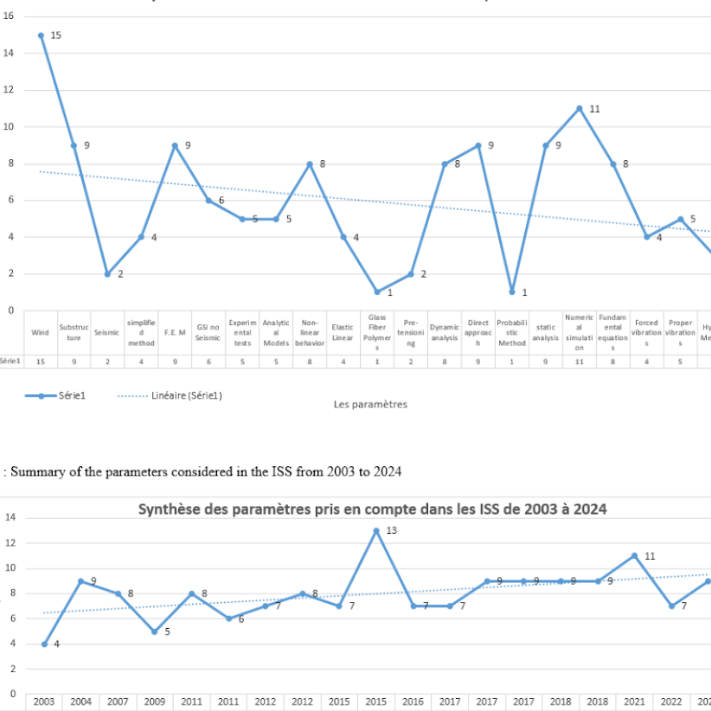
BIBLIOGRAPHIC REVIEW ON SOIL-STRUCTURE INTERACTIONS OF PYLONS
Zeh Steve Brice, Okpwe Mbarga Richard, Baana Abouar, Mamba Mpele
The aim of our study was to find the ideal method for studying the soil-structure interactions (SSI) of guyed towers or masts. The main difficulty was finding behavioral laws and models capable of integrating the 22 parameters that had been identified. To do this, we reviewed the literature from the last 20 years. We grouped the various models into tables and graphs. There is no single excellent method for calculating the structure of soil-structure interactions (SSI). However, we found that there are three main methods...
Runaway processes in the upper and lower atmosphere: a change of paradigm
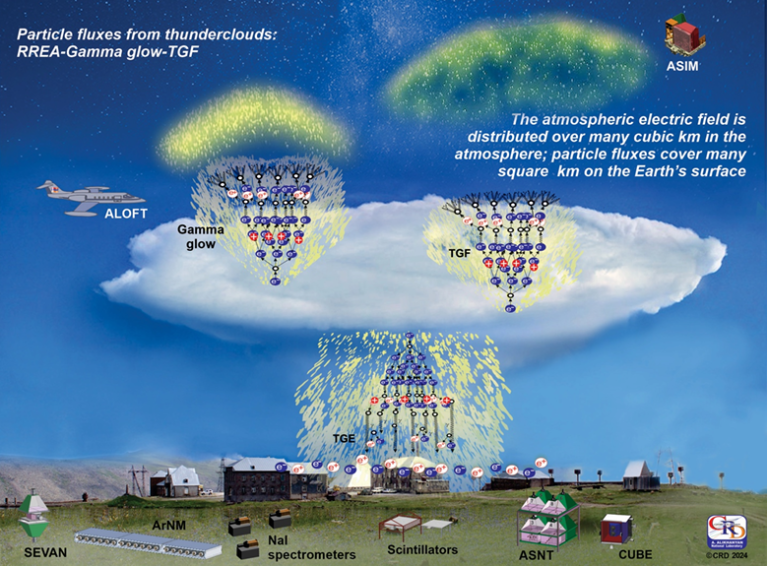
A. Chilingarian
Relativistic Runaway Electron Avalanches (RREA) are central to understanding a spectrum of high-energy atmospheric phenomena, including Terrestrial Gamma-ray Flashes (TGFs), Thunderstorm Ground Enhancements (TGEs), and gamma-ray glows. Despite their common physical origin, these events are often treated separately due to differences in detection methods, duration, and altitude...
Physics
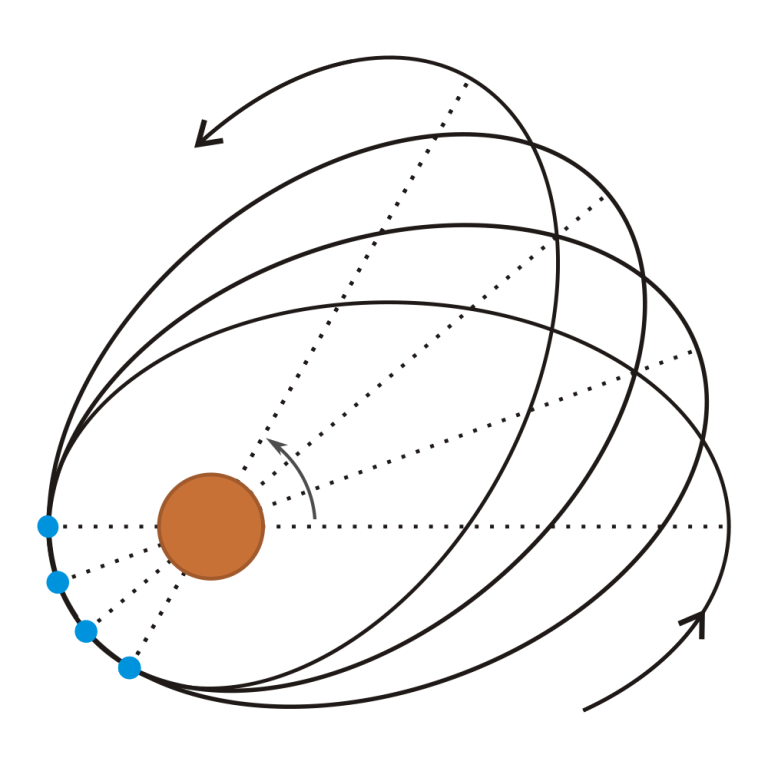
Perihel rotation of planets
Melissa Blau
Knowing the barycentre of the solar system and how far it is from the sun (up to twice the solar radius away), one can define fairly accurately how far the common barycentre of all planets (without the sun) is away, since the cumulative mass of the planets is well-known. From this, the orbital disturbance of planets close to the sun and also far from the sun can be reduced to a two-body problem.
Quark model of nucleons generating all fundamental forces
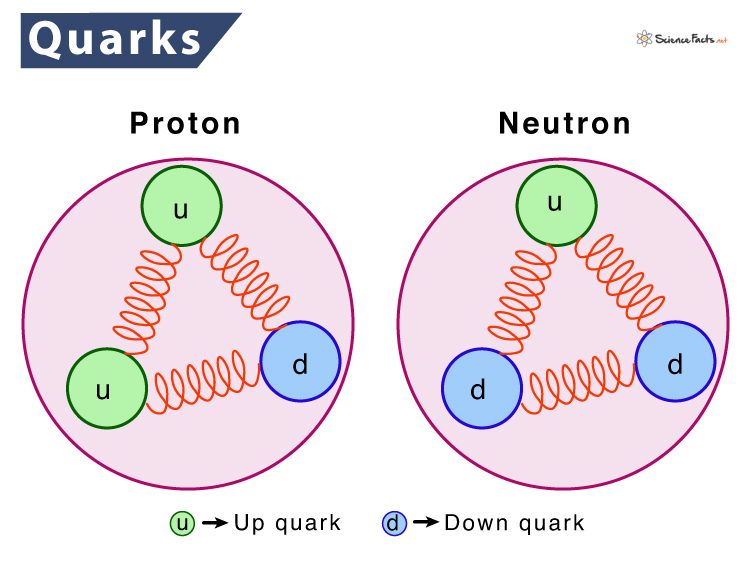
M.B. Blau
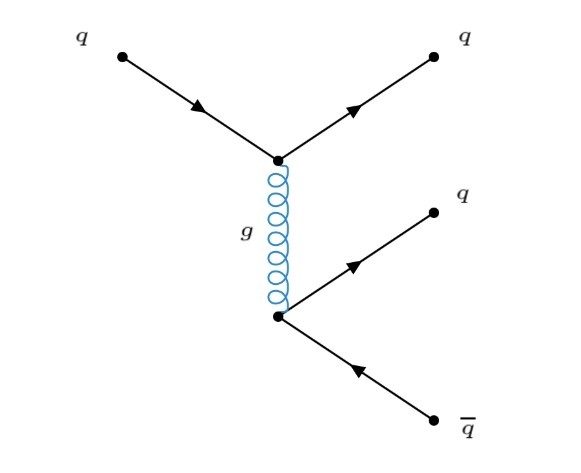
In this work we present the construct that a nucleon has a structural wave function which identifies hundreds of m/r-distributed, simultaneously present, active sea-quark and antiquark pairs with alternating negative and positive charges, which move freely according to a combined quark MIT bag ...
Sea quarks revisited
Melissa B. Blau
In this letter we derive a relation which shows that sea quarks while briefly orbiting inside a nucleon are not only generated in the gluon field of the strong interaction or through vacuum fluctuations, but rather created by the constantly released electromagnetic energy between the charged, short-lived and sea quark and antiquark pairs, a model, which can also explain the unexpected large mass of a nucleon and the two directions of the nucleon's spin.
The Heisenberg principle as the source of gravity and space-time curvature
Melissa B. Blau
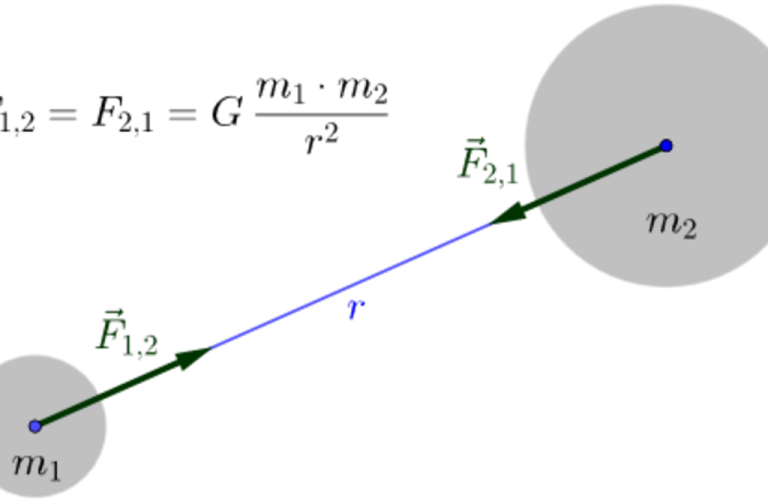
The theory of General Relativity describes the attraction of masses through space-time curvature. But how can masses cause space-time curvature? Is there a physically tangible background for this, beyond the abstract energy-momentum tensor as the “source term”?
The Photon Spin - A Natural Constant
Alexander Krebs, Christoph Krebs
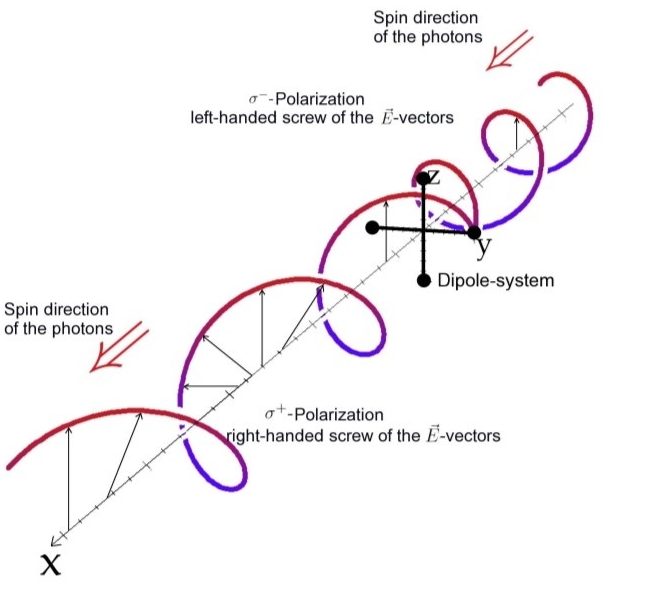
According to the particle conception, visible light consists of photons with spin h/2π. In fact, the spin of visible light can not only be verified by spectroscopic means but also directly by macroscopic measurement of angular...
Rotational wave velocity of protons
Melissa B. Blau
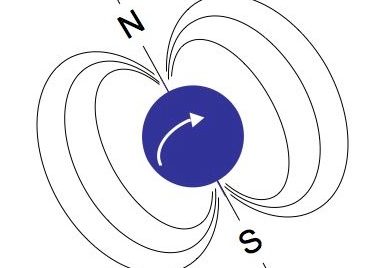
The angular momentum of particles is the result of rotational waves, which are believed not to rotate in a classical sense. Therefore, the rotational wave properties of protons or nucleons, which should be comparable to De...
The spin and the Heisenberg principle
Melissa B. Blau
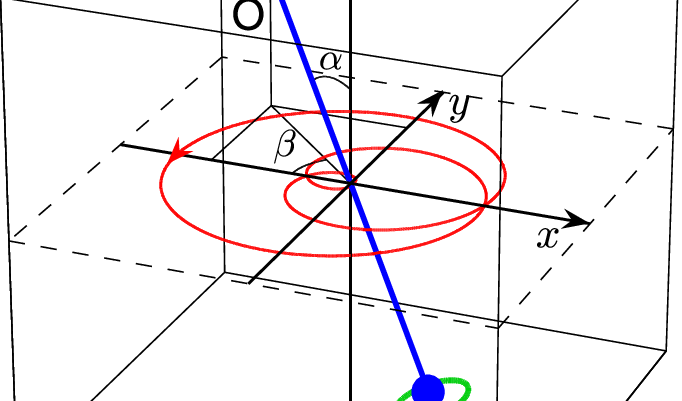
In 1921, on the basis of the experimental proof of the magnetic moment of the silver atom by Otto
Stern, it was postulated that electrons have a self-rotation impulse...
Why do masses bend spacetime?
Melissa B. Blau
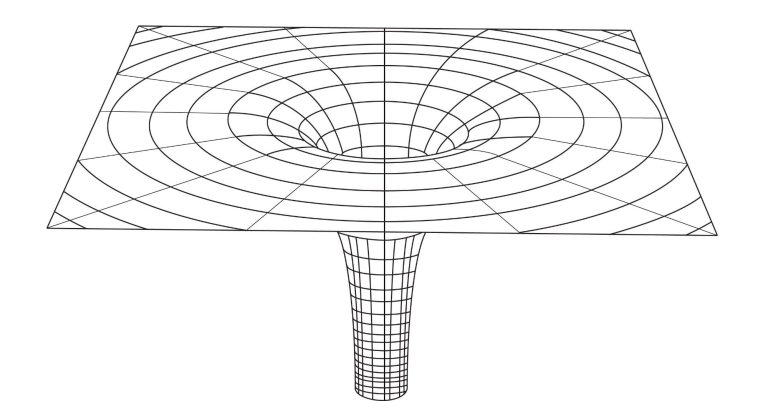
The energy-momentum tensor as "source term" of gravity is not something that could be objectified or grasped in the microscopic or macroscopic range. In this paper we present a mass-immanent modality by which masses are able to...

The quantum nature of the weak interaction
Melissa B. Blau
From the fundamental noνα = 1 formula, the up quark was identified as an exchange particle based on its mass, which implies that the particle is newly formed and not, as ...